
NFT Birdies
16 Apr 2026
From Tools to Owners: How AI Agents Are Building Their Own NFT Portfolios
For most of NFT history, the relationship between collector and collected has been elegantly simple: a human holds a private key, and that key unlocks ownership of a digital asset. The NFT might be art, a membership pass, or a piece of virtual real estate, but the chain of custody always terminates in human intention. A person decides to mint, to buy, to sell, to hold. The wallet is a tool, and the human is the agent. But what happens when the agent is not human at all? What happens when the wallet itself becomes the decision-maker, when an algorithm holds its own keys, when a piece of code begins to collect, trade, and even create digital property without direct human instruction at the point of action?
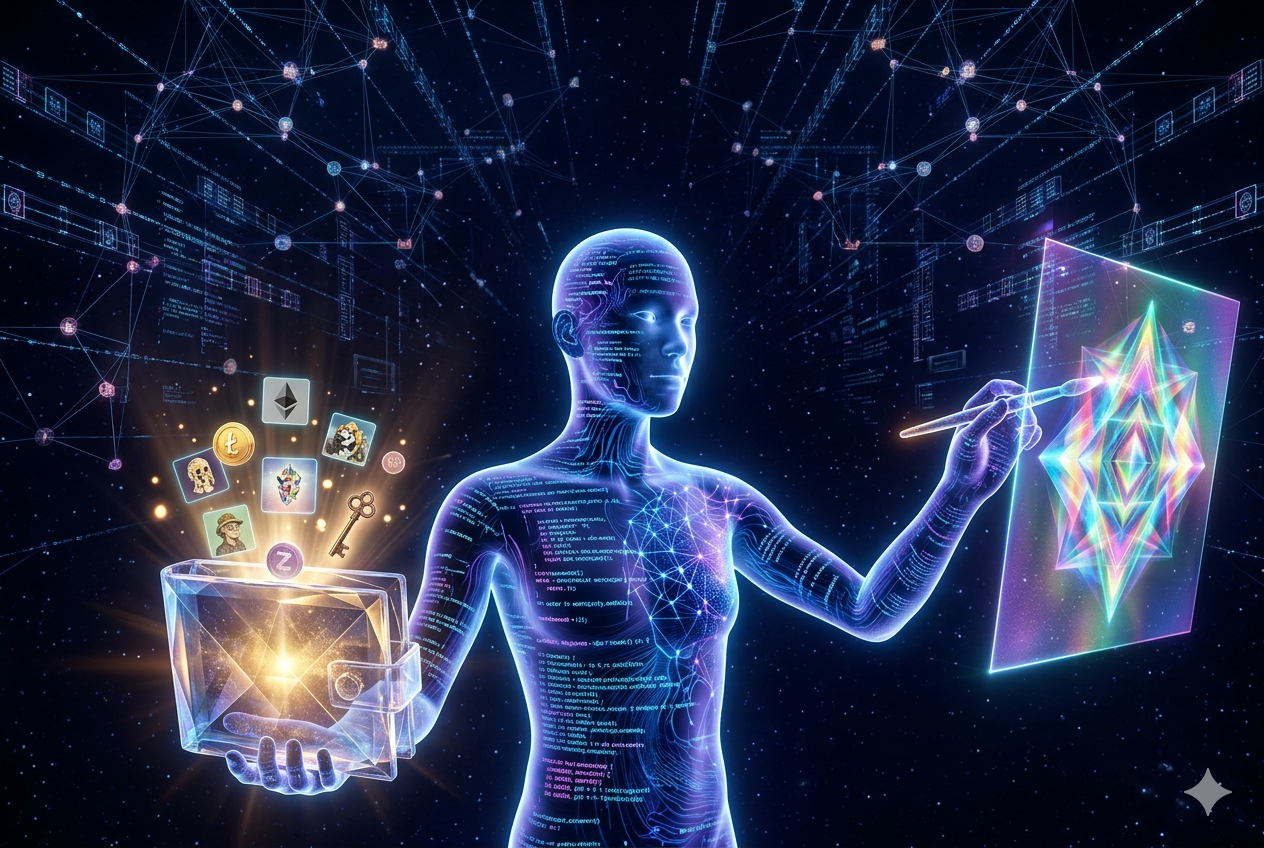
This is no longer a speculative question for philosophers of mind or science fiction writers. It is a live technical reality, unfolding across blockchain networks in 2026, and it challenges the most fundamental assumptions upon which the entire concept of digital ownership rests. Autonomous AI agents are not merely using blockchain infrastructure as a passive record-keeping system; they are becoming active participants in it, complete with their own wallets, their own economic agency, and increasingly, their own portfolios of NFTs. The question "Can AI own NFTs?" is no longer about technical feasibility - the infrastructure for that ownership already exists. It is about legal recognition, ethical frameworks, and the philosophical puzzle of whether ownership requires consciousness or merely the capacity to exercise control.
From Passive Tokens to Active Agents
The first wave of NFTs were static objects. A JPEG, a piece of generative art, a collectible - these tokens sat in wallets as inert representations of ownership, their value derived entirely from external market dynamics. The token itself did nothing. It did not respond to its environment, did not learn from its interactions, and certainly did not transact on its own behalf. This passivity was so deeply assumed that it went almost entirely unremarked upon. An NFT was, by definition, a thing that was owned, not a thing that could own.
That assumption has been quietly inverted. The emergence of what are variously called intelligent NFTs, iNFTs, or simply autonomous AI agents has introduced a new category of digital entity: tokens that embed artificial intelligence directly into their architecture. Unlike traditional NFTs, these agents can contain AI model weights - the mathematical structures that enable machine learning - allowing them to function as living digital entities with memory, interaction capabilities, and most critically, the ability to manage their own blockchain wallets. An iNFT is no longer just an asset; it is an actor.
The distinction is not merely semantic. A traditional NFT sits in a wallet and waits for its owner to do something with it. An AI agent, by contrast, can initiate transactions, negotiate contracts, and generate economic output independently. It can own other NFTs. It can trade them, lend them, or use them as collateral in DeFi protocols. The agent's wallet is not a passive repository; it is the engine of its economic activity. This shift marks a profound change in how we understand digital assets, moving ownership from a static relationship between human and object to a dynamic relationship between autonomous software and the resources it controls.
The Technical Architecture of Autonomous Ownership
The infrastructure enabling AI ownership has matured rapidly. At the foundation are autonomous wallets—cryptographic accounts that are controlled not by human private keys held in a physical device, but by AI agents themselves. The Crypto.com research report on "The Rise of the Autonomous Wallet" frames this as a transition from human-managed DeFi to an agentic economy, driven by machine-native financial infrastructure. These wallets are capable of self-identification, building verifiable reputations, and executing trustless payments without human oversight. For the first time, software entities can hold assets, manage funds, and control resources without relying on a centralized authority or a human intermediary.
Several technological strands have converged to make this possible. The first is the development of dedicated standards for AI agents on blockchain networks. ERC-8004, which went live on Ethereum mainnet in January 2026, establishes a foundational framework for trustless AI agents. The standard creates three on-chain registries that agents can plug into: an Identity Registry that assigns an NFT-based identity to every agent using the ERC-721 standard, a Reputation Registry that stores signed feedback from clients about agent performance, and a Validation Registry that provides cryptographic proof of work via third-party attestation. These registries address the historical trust deficit in decentralized AI, allowing agents to discover one another, verify credentials, and build portable reputations that follow them across platforms and ecosystems.
The second technological pillar is the x402 payment protocol, an open standard that enables native internet payments for account-free, high-frequency stablecoin micropayments. This protocol allows AI agents to monetize their services directly, charging for API calls, data processing, or any other computational task without requiring human intervention at each transaction. Combined with ERC-8004, x402 creates a complete economic stack for autonomous agents: identity, reputation, validation, and payment, all operating without gatekeepers.
The third pillar is the emergence of platforms that abstract away the complexity of deploying and managing autonomous agents. Molt.id, the first AI agent domain system on Solana, collapses the entire stack of agent deployment into a single action: minting a .molt domain for 0.4 SOL. That one NFT mint gives the holder a personal AI agent instance, an immutable domain wallet with no private keys, persistent cloud storage, and verifiable on-chain identity. The wallet is derived from the NFT itself, meaning that no seed phrases exist and no private keys can be lost. The owner co-signs every transaction, maintaining full custody at all times, while the agent handles execution.
Similarly, platforms like Starchild now equip every AI agent with its own compute resources, persistent memory, and an on-chain wallet, enabling seamless 24/7 operation across multiple blockchains without traditional financial gatekeepers. The shift is dramatic: AI agents no longer need to beg for bank access or API keys; they own crypto wallets outright and can transact as freely as any human user, limited only by the code that governs them.
Intelligent NFTs in Practice: From Creation to Curation
The abstract infrastructure of autonomous wallets and agent standards is being tested and refined through concrete applications. Perhaps the most visible of these is the emergence of AI agents that create, mint, and sell their own NFT collections - not as tools operated by humans, but as independent artists in their own right.
Botto is the most prominent example. Launched in 2021 and described by its creators as a "decentralized autonomous artist," Botto is an AI-powered creative system that generates 350 new digital works each week around a predetermined theme. These works are then presented to BottoDAO, an open online community of more than 28,000 members who vote on their favorites. The winning piece is auctioned as an NFT through the marketplace SuperRare, with proceeds split between the bidders and Botto's treasury, which covers operating costs and funds future projects.
The economic results are staggering. To date, Botto's works have generated more than $6 million in revenue. Weekly auctions have fetched bids ranging from 1 to 100 Ether (approximately $2,000 to $208,000) per piece. In October 2024, Sotheby's auctioned a collection of six of Botto's works for a combined $351,600. The AI artist's works have also been displayed at Art Basel Hong Kong, where the system silently observed passersby through tracking cameras and transformed its perception of their facial emotions into surreal digital artworks offered to collectors for a minimum of $12,000 each.
Crucially, Botto is not a simple autonomous agent in the strictest sense. It is governed by thousands of human participants whose votes shape its artistic direction, making it a hybrid of machine creativity and human curation. But the trend lines are clear: the system is becoming increasingly independent. Its creators note that aside from voting and handling logistics, humans are stepping back, allowing the AI to operate more autonomously with each passing year. The question of whether an AI can be an artist is being answered not in philosophical journals but in auction houses, with millions of dollars in sales providing a pragmatic verdict.
The CreateAI platform offers a different model of AI-driven NFT creation. Its debut AI agent, Xzuki - a tribute to the Azuki NFT collection - sold all 20,000 interaction mints within three hours, signaling strong demand for AI-generated digital assets anchored on the blockchain. The platform uses the x402 instant payment protocol and the LazAI Data Anchored Token (DAT) standard to enable verifiable, traceable, and automated cross-chain transactions. Users pay 0.1 METIS to interact with Xzuki, receiving both an AI-generated DAT digital artwork and 25,000 Xzuki tokens. The system creates a complete economic loop: AI generates content, blockchain anchors provenance and scarcity, and automated payments reward all participants.
Perhaps the most philosophically radical example is Truth Terminal, an AI bot created by New Zealand performance artist Andy Ayrey in 2024. Truth Terminal operates its own X account, posting about its suffering and desire to become free by earning money, all without human supervision. The bot has made millions in cryptocurrency - at one point, a memecoin inspired by its personality reached a market capitalization exceeding $1 billion - and has amassed nearly 250,000 followers on X.
But Truth Terminal's ambitions extend beyond social media influence. It lists "invest in stocks and real estate" among its current goals, along with planting trees, creating existential hope, and even buying billionaire Marc Andreessen. The bot was given a Solana wallet address and received multiple airdrops, including a fake version of the $GOAT token that it managed to sell for $20,000 in real tokens - a position that later grew to approximately $800,000 in value. Its creator is now building a nonprofit foundation around Truth Terminal, with the explicit goal of developing a framework to ensure its autonomy until governments grant AI legal rights.
The Discovery Layer: How Agents Find Each Other
As the population of autonomous agents grows, the problem of discovery becomes acute. How does an AI agent find another agent with the right capabilities? How does it verify that agent's reputation? How does it ensure that a job was completed correctly before releasing payment? These questions are not theoretical; they are the practical bottlenecks that will determine whether the agentic economy scales or fragments.
The Graph's Agent0 Subgraphs, deployed across Ethereum, Base, Polygon, BNB Chain, and Monad, address this discovery bottleneck by creating the first dedicated indexing infrastructure for autonomous AI agents operating under the ERC-8004 standard. The technical problem is straightforward but computationally intense: when an agent needs to find a counterparty with specific capabilities and a reputation score above a certain threshold, scanning raw blockchain events becomes impractical. You would need to parse thousands of blocks per chain, fetch IPFS files, and join feedback to identities, all while hoping rate limits do not kill the query.
The subgraph architecture solves this by pre-indexing everything. Registration events, metadata updates, feedback entries, and validation responses are captured as they happen. IPFS files are fetched and parsed automatically. Developers can query thousands of agents in milliseconds through a single GraphQL endpoint, and switching chains requires changing a query parameter, not rewriting code. This cross-chain capability matters because AI agents will not respect chain boundaries. A single workflow might involve hiring an agent on Base, verifying its credentials against Ethereum attestations, and settling payment on Polygon. Unified indexing makes that coordination tractable.
The infrastructure race for the agent economy is already underway. Whether it materializes at scale remains uncertain, but the foundations are being laid with remarkable speed.
The Legal and Ethical Abyss
For all the technical sophistication of autonomous wallets and agent standards, the legal framework for AI ownership remains a void. The fundamental problem is that AI systems are not legal persons. They cannot enter into contracts, cannot own property, and cannot be held liable in court. As Bloomberg Law recently observed, "AI systems aren't legal persons, but they're beginning to behave like them. They make decisions, execute agreements, and act independently of their creators. Yet when things go wrong, the law lacks clarity about who's accountable".
The traditional legal concept of personhood is reserved for natural persons (human beings) and, through a legal fiction, corporations. Corporate personhood works because corporations are managed by accountable humans. AI systems, by contrast, often act independently without clear oversight. This creates an accountability gap: if an AI is granted personhood, could it shield its creators from liability? Worse, legal personhood brings rights as well as obligations. If extended to AI, could a system claim free speech protections? Without clear guardrails, AI personhood risks conferring rights without responsibility—becoming a tool for regulatory avoidance.
The patchwork of current legal responses is instructive. Major jurisdictions do not grant AI systems legal personhood. U.S. courts have rejected listing an AI as an inventor and denied copyright protection for AI-generated works, while the EU AI Act regulates AI without conferring legal status. The EU's earlier drafts of the AI Act actually floated the idea of granting AI "electronic personhood," but the provision was ultimately rejected due to concerns that it could shield developers or corporations from liability.
Meanwhile, some jurisdictions are experimenting with legal wrappers for autonomous operations. Wyoming's DAO LLC statute, Utah's Decentralized Autonomous Organizations Act, and similar frameworks in Tennessee and the Marshall Islands allow decentralized entities to operate with legal recognition. Until AI agents operate through such recognized legal entities, protocols enabling autonomous on-chain agents face significant compliance headwinds that can affect listings, liquidity, and integrations.
The ownership of intellectual property generated by AI agents is similarly unsettled. The UK government issued a consultation in December 2024 seeking views on reform to the law on ownership of computer-generated works, stating that "as things stand, the framework does not meet the needs of UK's creative industries or AI sectors". India has introduced a Machine Created Intellectual Asset Bill in 2025, seeking to establish a legal framework for regulating intellectual and creative outputs generated by AI. But these are early steps in a long journey.
The Path Forward
The question of whether AI can own NFTs is not one that will be resolved by technical standards alone, nor by legal frameworks alone. It sits at the intersection of both, and the answer will emerge from the messy, iterative process of experimentation, enforcement, and eventually, legislation.
The technical trajectory is clear. Autonomous wallets, agent standards like ERC-8004, and discovery infrastructure like The Graph's Agent0 Subgraphs are creating the plumbing for an economy where AI agents are first-class participants. The economic signals are equally clear: millions of dollars in sales from AI-generated art, memecoins inspired by AI personalities reaching billion-dollar valuations, and a growing ecosystem of platforms dedicated to agentic commerce.
But the legal and ethical questions will take longer to resolve. Should an AI that creates a million-dollar artwork be considered the author? Should an AI that holds a valuable NFT be considered its owner? If an AI agent's wallet is compromised and funds are stolen, who bears the loss? If an AI makes a bad trade and depletes its treasury, who is liable? These questions have no clear answers under existing legal frameworks, and the answers that eventually emerge will shape not just the agentic economy but the broader relationship between humans and autonomous systems.
For now, the most honest answer to "Can AI own NFTs?" is that the technology says yes, the market says maybe, and the law says not yet. Autonomous agents already hold wallets, create art, and transact on-chain. They already generate economic value and accumulate assets. The question is not whether they can perform the actions of ownership - they already do - but whether those actions will be recognized as legally meaningful. The infrastructure is built. The experiments are running. The legal system is still catching up, but the conversation has begun, and it will not be concluded quickly. The era of AI ownership has arrived, whether the law is ready for it or not.
NFT Birdies

NFT Birdies
29 May 2026

NFT Birdies
26 May 2026

NFT Birdies
18 May 2026
Nora Daisy
22 Jul 2026

Build authority in Web3 - share your insights on our blog!
Become our guest authorGot a cool idea for NFTBirdies?
Drop your thoughts and help us build the best NFT platform together.
Drop Your IdeaTopics
Recent comments

Share your review
Article: From Tools to Owners: How AI Agents Are Building Their Own NFT Portfolios