

NFT Birdies
3 Feb 2026
Web3 in 2026: Beyond the Hype Cycle - The Sustainable Trends That Will Actually Matter
The Sustainable Trends That Will Actually Matter
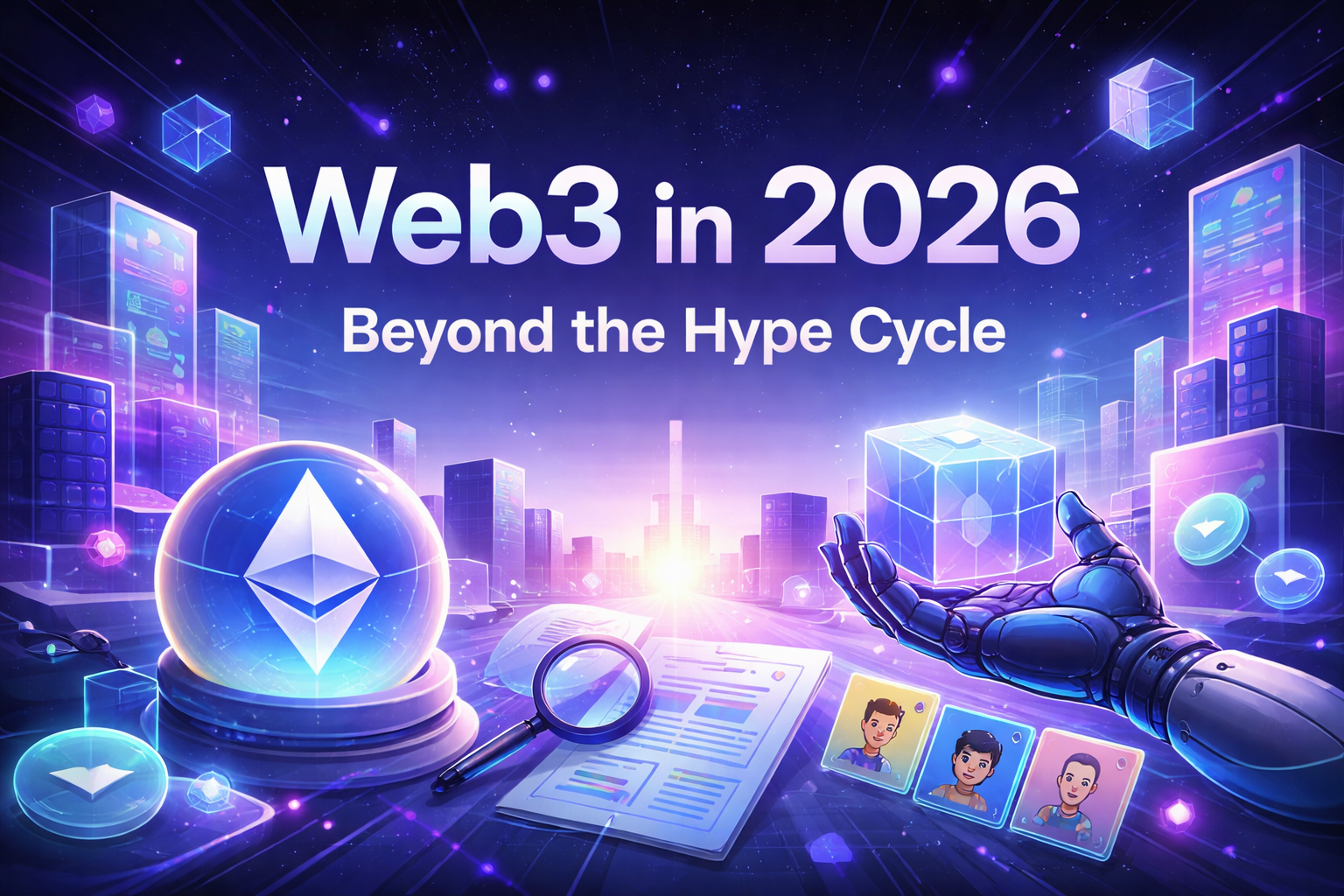
The Web3 space has been a masterclass in hype cycles. Over the last decade, it has repeatedly demonstrated how quickly narratives can form, attract massive capital, and collapse under the weight of unrealistic expectations. ICOs promised to reinvent global finance overnight, NFTs were declared the future of culture before their utility was understood, and metaverses were framed as inevitable digital civilizations long before people meaningfully wanted to inhabit them. Each wave followed the same arc—rapid speculation, shallow experimentation, and eventual collapse—leaving behind skepticism and fatigue.
Yet beneath the noise of memes, gambling, and get-rich-quick schemes, something far more durable has been quietly developing. While speculative excess dominated headlines, infrastructure matured in the background. Protocols became more robust, developer tooling improved, and real-world use cases began to take shape outside of hype-driven narratives. As we look toward 2026, the question is no longer “What’s the next viral Web3 trend?” but rather “Which foundational systems are being built today that will quietly underpin digital life for the next decade?”
The froth is receding. What remains are utility-driven trends focused on solving tangible human, economic, and institutional problems. This shift marks the end of “blockchain for blockchain’s sake” and the beginning of something more subtle but far more impactful: invisible infrastructure, practical ownership, and sustainable digital systems that work whether users understand the underlying technology or not. The next phase of Web3 will not be loud. It will be effective.
Forget the hype. Here’s what will actually matter.
Part 1: The Great Integration — Web3 Becomes a Feature, Not a Product
By 2026, the most important development in Web3 will not be a breakout standalone application proudly branding itself as “decentralized.” Instead, blockchain technology will be absorbed into the fabric of existing digital experiences, functioning as an enabling layer rather than a destination. Users will not consciously “enter Web3.” They will simply use products that happen to rely on decentralized infrastructure behind the scenes.
This shift will be most visible in social platforms, where ownership and identity finally become portable. Wallet-based logins will exist alongside traditional authentication methods, not as niche crypto features but as standard options. Social graphs, reputations, and monetization layers will increasingly live on open protocols, allowing users to move between applications without losing their audience or accumulated value. The front-end experience may remain centralized and algorithmically optimized, but the underlying ownership layer will belong to users. This breaks platform lock-in at its core, ensuring that creators capture the long-term value of their work rather than surrendering it to opaque advertising models.
Gaming will undergo a similar transformation. The flawed “play-to-earn” narrative will fade, replaced by a more durable model centered on ownership rather than extraction. By 2026, major publishers will quietly integrate tokenized assets into their backend economies. Items earned through gameplay will no longer be fragile entries in proprietary databases but durable, transferable assets that players can trade, lend, or retain independent of any single game’s lifecycle. The blockchain will not be the game - it will be the persistent ledger that ensures player effort translates into lasting value.
Perhaps the most consequential integration will occur within enterprises. Supply chains, intellectual property licensing, and inter-company settlements will increasingly operate on private or hybrid blockchains, not out of ideological alignment but because they reduce friction, improve auditability, and automate trust. Consumers will experience this indirectly through verifiable product histories, transparent sustainability claims, and seamless loyalty programs, often without realizing that blockchain infrastructure is involved at all. Integration succeeds precisely because it disappears from view.
Part 2: The Rise of the Physical–Digital Hybrid — Phygital 2.0
The first generation of phygital experiments largely failed because they misunderstood value. Attaching a static NFT to a physical product rarely enhanced ownership or experience in any meaningful way. By 2026, however, physical–digital integration will become dynamic, functional, and essential to modern commerce.
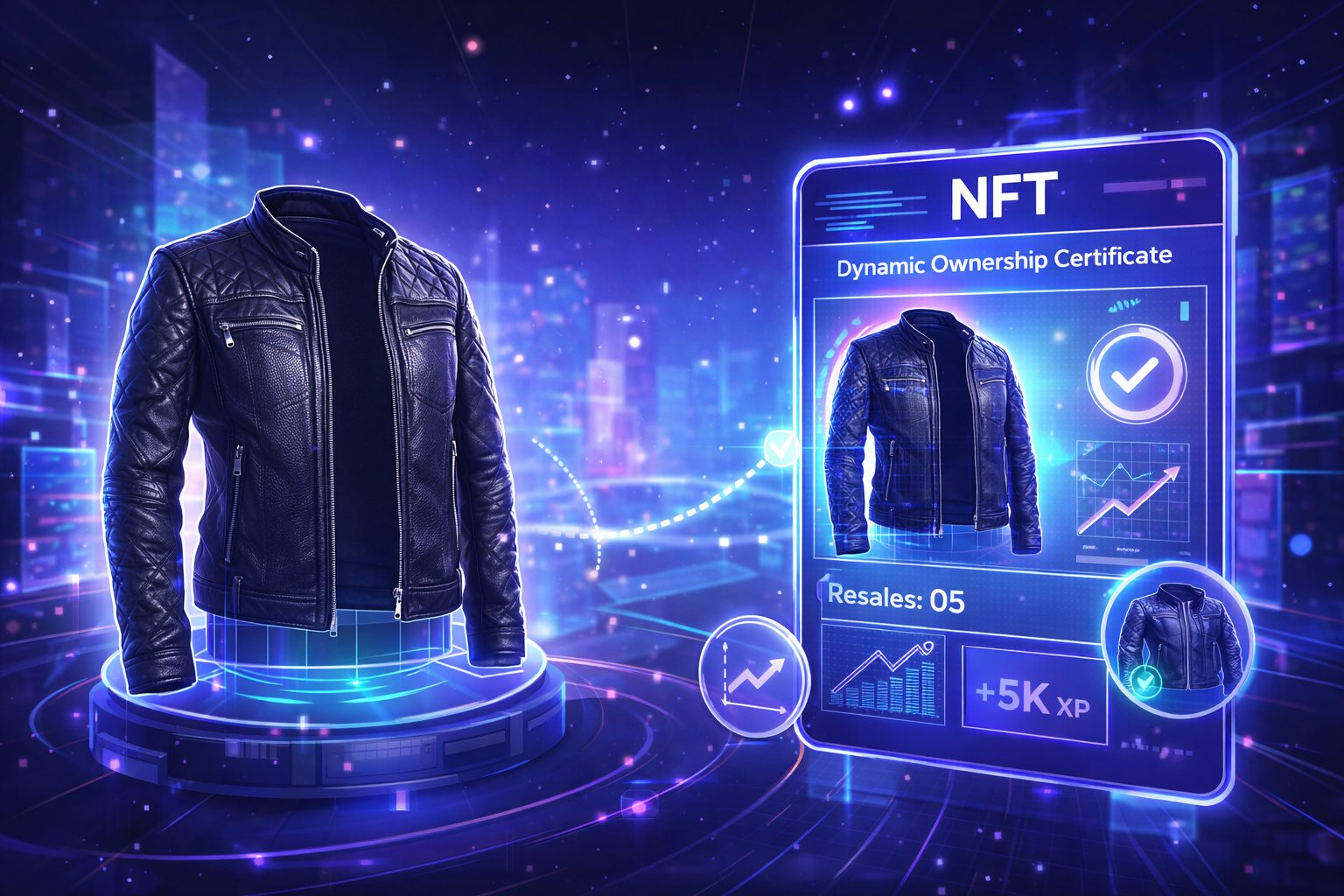
Ownership itself will become programmable through dynamic NFTs that act as living records rather than static certificates. Vehicle titles, real estate deeds, luxury goods authentication, and high-value collectibles will increasingly exist as on-chain assets that update over time. A car’s NFT may include maintenance records, accident history, and ownership transfers, while a property NFT could track renovations, permits, and insurance events. This creates trustless histories that simplify transactions, reduce fraud, and increase asset liquidity.
Beyond ownership, NFTs will unlock ongoing experiences and relationships. Purchasing a product will no longer mark the end of engagement but the beginning of a continuous interaction between brand and customer. A concert ticket NFT might evolve into a long-term access pass, unlocking exclusive content and future presales. Fashion NFTs could allow owners to express their physical purchases across digital spaces. Consumer brands may issue NFTs that confer permanent discounts or governance rights, transforming loyalty from a marketing gimmick into a verifiable, user-owned asset.
Crucially, resale markets will also be restructured. Smart contracts embedded in NFTs will allow creators and brands to participate in secondary markets automatically, ensuring that value circulates sustainably rather than being captured solely by intermediaries. This shift aligns incentives across creators, consumers, and platforms, reinforcing quality, longevity, and trust.
Part 3: AI × Web3 Symbiosis — Autonomous Agents and Trustless Verification
The intersection of artificial intelligence and Web3 will define the technological landscape of the late 2020s. This convergence is not about AI generating NFTs but about blockchain providing the trust, ownership, and incentive layers necessary for an AI-driven economy to function responsibly.
Autonomous AI agents will increasingly manage financial portfolios, negotiate contracts, schedule logistics, and coordinate services. To operate independently, these agents require economic sovereignty: wallets, asset ownership, and permissionless access to global payment systems. Web3 offers the only viable framework where software can function as a first-class economic actor without reliance on centralized intermediaries.
At the same time, AI-generated content will flood the digital ecosystem, making provenance and authenticity essential. Blockchain-based verification will allow creators to establish on-chain authorship and trace derivatives, ensuring attribution and compensation remain transparent. In a world where synthetic content is abundant, verifiable origin becomes the primary signal of trust.
Decentralized AI training and data markets will further rebalance power away from centralized tech monopolies. Individuals will be able to contribute data, compute resources, or specialized models to open networks and receive compensation aligned with actual usage and value. AI supplies intelligence and automation; Web3 supplies trust and incentives. Together, they form a symbiotic system neither can achieve alone.
Part 4: Regulatory Clarity and Institutional Onramps — The New Rulebook
By 2026, the regulatory ambiguity that once defined Web3 will largely give way to structured clarity. Distinctions between utility tokens, securities, and payment instruments will be codified across major jurisdictions, enabling builders to innovate with confidence and institutions to participate without existential legal risk.
This clarity will accelerate institutional adoption. Tokenized treasuries, real estate, funds, and private assets will operate on public blockchains, not as experimental pilots but as core financial instruments. This does not represent crypto becoming traditional finance; rather, it reflects traditional finance rebuilding itself on more efficient, transparent infrastructure.
Privacy-preserving compliance will bridge the gap between decentralization and regulation. Zero-knowledge proofs will allow users to demonstrate compliance without sacrificing personal privacy, enabling global participation while satisfying regulatory requirements. Web3 will move from ideological fringe to professionalized infrastructure.
Part 5: The Scalability Trilemma, Functionally Solved — User Experience as King
The long-standing trade-offs between decentralization, security, and scalability will be functionally resolved through layered architectures. Ethereum will solidify its role as a settlement layer, while most user activity occurs on fast, low-cost rollups. Movement between chains will become seamless, rendering network distinctions largely irrelevant to users.
Account abstraction will eliminate onboarding friction, replacing seed phrases and gas anxiety with familiar, intuitive experiences. Cross-chain interoperability will mature, allowing assets and identities to move freely across ecosystems. The result is not a fragmented multi-chain world but a unified, omnichain experience.
Conclusion: The Invisible Revolution
By 2026, the most successful Web3 projects will not be those loudly proclaiming decentralization but those that have integrated it so effectively that users no longer notice it. The hype will fade not because the technology failed, but because it succeeded in becoming ordinary.
Web3’s true impact will be felt in subtle ways: seamless loyalty programs, verifiable digital receipts, portable social identities, and trusted AI-generated content. Its success will not be measured by token prices but by the quiet return of ownership, control, and economic agency to individuals.
The hype cycle ends where utility begins.
And that future is already being built.
NFT Birdies
NFT Birdies
30 Mar 2026

NFT Birdies
17 Mar 2026
Build authority in Web3 - share your insights on our blog!
Become our guest authorGot a cool idea for NFTBirdies?
Drop your thoughts and help us build the best NFT platform together.
Drop Your IdeaTopics
Recent comments

Share your review
Article: Web3 in 2026: Beyond the Hype Cycle - The Sustainable Trends That Will Actually Matter