

NFT Birdies
6 Jan 2026
The Cryptographic Convergence: Decoding the Structural Shifts Defining 2026
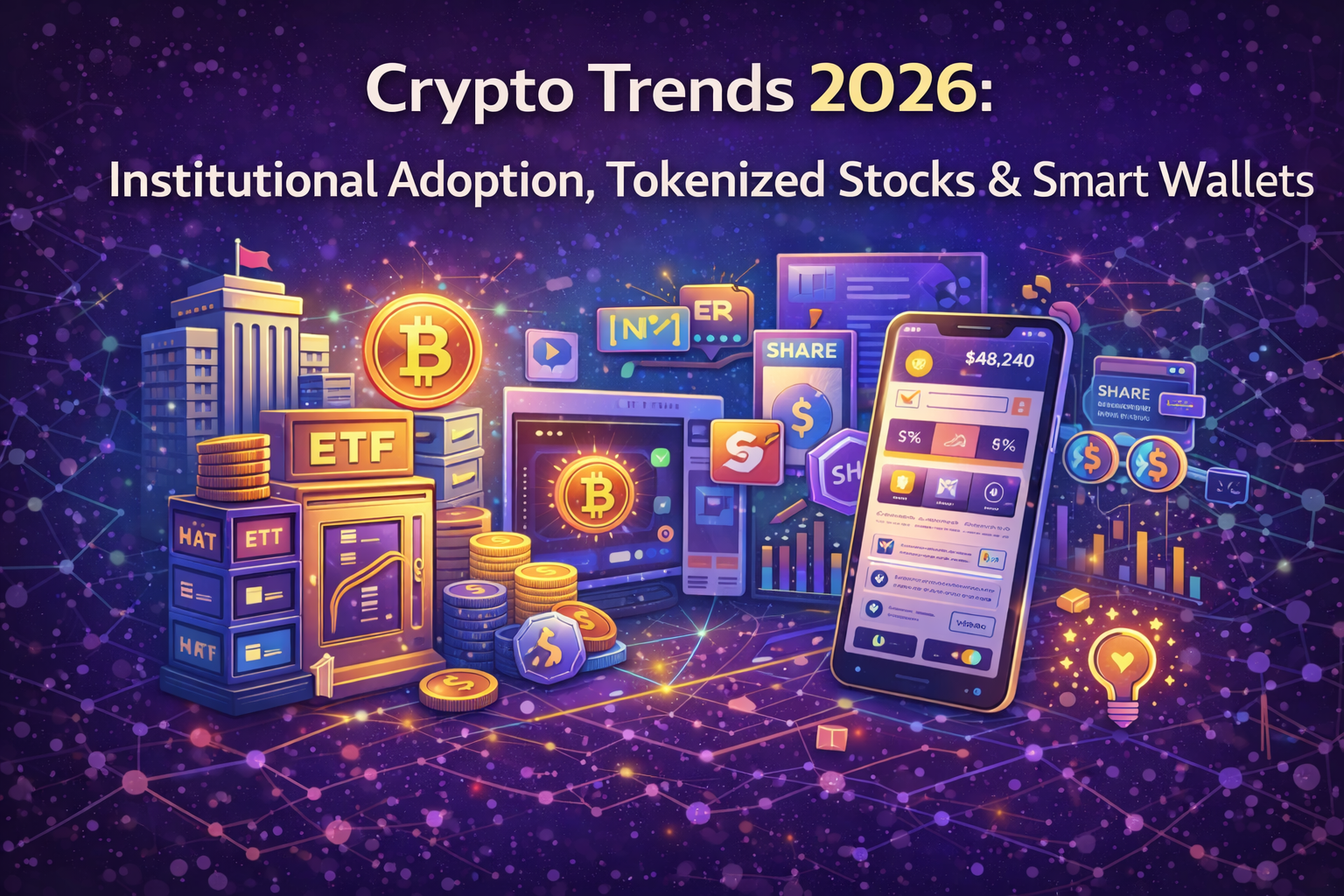
The cryptographic landscape is undergoing a profound metamorphosis, transitioning from a frontier of speculative fervor into a maturing ecosystem of institutional-grade infrastructure. This evolution is not merely a change in market sentiment but a fundamental restructuring of the very architecture of value exchange, ownership, and financial interaction on a global scale. As we stand on the precipice of 2026, the industry is being shaped by a confluence of forces: the deepening integration of institutional capital, the crystallization of regulatory frameworks across major economies, and the relentless, user-driven innovation that moves blockchain technology from the periphery to the core of financial and social systems. This maturation phase is characterized by a departure from narrative-driven bubbles towards the sustainable development of utility-driven platforms that solve tangible, real-world problems. The coming period will be defined not by which token can generate the most ephemeral hype, but by which protocols can most effectively embed themselves into the fabric of global commerce, governance, and individual sovereignty. To navigate this new era, one must understand the deep structural currents that are redirecting the flow of capital, innovation, and user adoption, shaping an ecosystem that is increasingly interoperable with, yet fundamentally transformative of, the traditional financial world.
The year 2025 served as a pivotal inflection point, marking the unambiguous arrival of institutional capital as a dominant, stabilizing force within the crypto economy. This was the year corporate treasury strategies evolved from experimental allocations to standardised financial doctrine, with over two hundred publicly traded companies now holding Bitcoin as a non-correlated reserve asset and a hedge against monetary debasement. This institutional accumulation has precipitated a significant macro-trend: a sustained exodus of Bitcoin from centralized exchanges to long-term custodial solutions and self-custody. With only approximately 2.94 million BTC remaining on trading platforms—the lowest reserve in half a decade—the market dynamics have fundamentally shifted. The liquidity available for speculative trading is being deliberately constricted, while over 2.5 million BTC are now effectively locked away in exchange-traded fund (ETF) vehicles and institutional vaults, representing patient capital with a multi-year horizon. This bifurcation creates a new market paradigm: retail and algorithmic traders continue to provide necessary liquidity and volatility in the short-term markets, while a vast, growing pool of institutional capital establishes a rising floor price through passive, long-term accumulation. This sets the stage for a period of reduced speculative frenzy and increased focus on the underlying utility and cash flows of blockchain networks, as the market’s center of gravity shifts decisively toward holders who evaluate assets through the lens of durable value rather than short-term momentum.
The Financial Super-App: The Wallet as a Sovereign Banking Interface
The most palpable evolution for end-users will be the transformation of the cryptocurrency wallet from a simple key-management tool into a comprehensive, sovereign financial operating system. In 2026, the wallet transcends its original purpose, evolving into a unified interface for an individual’s entire economic life—a decentralized super-app that amalgamates functions historically siloed across banks, brokerages, and payment processors. Modern wallet infrastructures now seamlessly integrate fiat on-ramps, peer-to-peer payments, decentralized exchange (DEX) aggregation for asset swaps, cross-chain interoperability protocols, and sophisticated yield-generation strategies through automated vaults and restaking primitives. This convergence creates a user experience analogous to a traditional banking application, but architected on a foundation of radical self-custody and permissionless innovation. The critical distinction is ontological: in this model, the user possesses direct, unmediated ownership of their assets through cryptographic keys, while the application layer merely provides a curated window into a global, open financial network. Platforms like Trust Wallet and emergent suites such as Ether.fi are precursors to this future, blending intuitive design with deep DeFi integrations. As regulatory clarity advances, particularly around identity abstraction and transaction compliance, these wallet-based super-apps will become the primary gateway for the next wave of adoption, offering emerging economies and the unbanked a more robust, accessible, and self-sovereign financial suite than any legacy institution could provide, thereby redefining the very concept of a bank account.
The On-Chain Equities Revolution: Democratizing Ownership and Liquidity
Parallel to the evolution of wallets is a seismic shift in capital formation: the movement of traditional equity ownership onto public blockchains. While the past decade witnessed the proliferation of utility tokens, often with ambiguous legal rights, 2026 will be defined by the rise of tokenized securities - digital assets representing unambiguous ownership in real-world cash flows, intellectual property, and corporate governance. This transition moves beyond the initial concept of "tokenization," which often merely mirrored existing securities on-chain, toward native on-chain issuance. Startups, and eventually public companies, will issue shares directly as programmable digital assets on regulated blockchain platforms, enabling features impossible in traditional finance. These tokenized equities facilitate 24/7 global trading, dramatically reduce settlement times from T+2 to near-instantaneity, enable fractional ownership of any asset class, and automate complex corporate actions like dividend distributions and voting through embedded smart contracts. This model dismantles the historical gatekeeping of venture capital and public markets, granting retail investors worldwide access to early-stage growth opportunities previously reserved for accredited institutions. Furthermore, it provides companies with a more efficient, transparent, and liquid capital table. The legal clarity of equity tokens—contrasted with the regulatory gray area of many utility tokens—combined with their programmability, creates a powerful new hybrid asset class that faithfully bridges the trust and legal frameworks of TradFi with the efficiency and accessibility of DeFi, paving the way for a truly global and liquid market for private and public company ownership.
The Decentralized Trading Paradigm: From Exchanges to Prediction Ecosystems
The architecture of trading itself is undergoing a radical decentralization. User preference is shifting inexorably from centralized exchanges (CEXs), which require custodial surrender of assets, toward decentralized exchanges (DEXs) and autonomous trading protocols where users execute swaps directly from their self-custodied wallets, retaining possession throughout the transaction lifecycle. This trend is driven by growing sophistication in DEX user experience, the rise of cross-chain liquidity aggregation, and a deepening cultural value placed on financial sovereignty post-high-profile exchange failures. Alongside this, a more profound evolution is occurring in the realm of decentralized prediction markets, which are maturing from niche betting platforms into sophisticated engines for collective intelligence. These markets, where users stake capital on the outcome of real-world events - from election results and geopolitical developments to project delivery dates and scientific breakthroughs - are surpassing $11 billion in total value locked. By 2026, they are poised to expand exponentially, fueled by the integration of high-fidelity real-world data oracles and advanced cryptographic techniques like zero-knowledge proofs for processing confidential information. These platforms do more than facilitate speculation; they aggregate dispersed knowledge and incentivize truth discovery, creating globally accessible, continuous sentiment indicators that are more resistant to manipulation than polls or expert panels. This transforms prediction markets from gambling adjacent curiosities into vital infrastructure for hedging real-world risk, informing decision-making, and creating a transparent, crowd-sourced view of the future—a logical and powerful extension of blockchain’s core capability as a trustless coordination layer.
Navigating the New Landscape: A Framework for Sustainable Value
The implications of these converging trends necessitate a fundamental recalibration of investment and participation strategy within the crypto ecosystem. The era of reliably profiting from low-cap, narrative-driven speculation is receding, replaced by a market environment that is more efficient, more institutionalized, and consequently, more challenging for undisciplined short-term trading. The path to sustainable engagement lies in focusing on projects and protocols that demonstrate foundational utility, tangible economic activity, and a clear path to long-term viability. Scrutiny must shift from tokenomics diagrams to key performance indicators such as consistent growth in active addresses, protocol-generated revenue (fees paid to the network, not token speculation), and the robustness of the developer ecosystem. The most significant opportunities will arise at the intersection of real-world need and cryptographic innovation - specifically in platforms that demonstrably enhance the efficiency of payments, expand access to asset ownership, provide verifiable digital identity, or create new models for community-driven governance and value distribution. These are not speculative narratives but the essential plumbing of a new digital economy. The future of crypto, as it solidifies into a permanent layer of global infrastructure, will be characterized less by volatile hype cycles and more by the steady, measurable accrual of utility, user adoption, and integration into the everyday mechanisms of value and trust. The cycle culminating in 2026 will be built by those who construct these indispensable tools, and rewarded those who possess the foresight to recognize their foundational importance early.
NFT Birdies
NFT Birdies
30 Mar 2026

NFT Birdies
17 Mar 2026
Build authority in Web3 - share your insights on our blog!
Become our guest authorGot a cool idea for NFTBirdies?
Drop your thoughts and help us build the best NFT platform together.
Drop Your IdeaTopics
Recent comments

Share your review
Article: The Cryptographic Convergence: Decoding the Structural Shifts Defining 2026