

NFT Birdies
3 Dec 2025
Seasonal NFT Strategy: Mastering Market Cycles for Optimal Drops in 2025
Introduction: The Unseen Lever of Success

Launching an NFT collection in 2025 transcends the fundamentals of compelling art, a robust narrative, and technically sound smart contracts. While these elements remain the bedrock of any project, an often-overlooked lever has emerged as a decisive factor between obscurity and success: strategic timing. In the maturing Web3 ecosystem—a landscape increasingly defined by rhythmic market cycles, volatile sentiment shifts, and the migratory patterns of liquidity and attention - the creator who masters when to drop holds a formidable, data-driven advantage. This is no longer merely an art form; it is a science of synchronization.
Welcome to the disciplined practice of Seasonal NFT Strategy - a comprehensive methodology for aligning your creative release with the natural ebb and flow of the crypto markets. This guide serves as your playbook for moving beyond intuition, offering a framework to plan and execute drops with surgical precision, ensuring your work reaches its ideal audience at the moment they are most receptive and capable of engagement.
The Critical Importance of Timing in the Modern NFT Landscape
The early, frenetic days of the NFT space often resembled a digital gold rush, where timing felt chaotic and success could appear random. By 2025, however, the market has matured, revealing distinct, analyzable patterns. Collectors and investors now operate within predictable behavioral waves, migrating attention and capital between blockchain ecosystems in response to incentives. Liquidity demonstrably swells around major crypto events and protocol announcements. Market activity frequently spikes at quarter beginnings as portfolios are re-evaluated. Furthermore, social media platforms act as accelerants, creating intense, fleeting micro-cycles around nascent trends, from AI-generated art and immersive gaming assets to the cultural frenzy of memecoins.
For the astute creator, understanding and navigating these patterns is not optional—it’s critical. A well-timed launch directly influences several key performance indicators:
Increased Mint-Out Probability: Launching into a period of high liquidity and collector engagement significantly raises the chances of selling out your collection, establishing crucial initial momentum.
Enhanced Post-Launch Floor Stability: A project that finds its audience during an active market phase tends to establish a more stable and resilient floor price, building confidence among long-term holders.
Precision Targeting of Active Collectors: Seasonal strategy allows you to present your work to the right collectors when they are actively browsing, participating, and allocating funds, rather than when they are disengaged.
Avoidance of Cryptographic "Dead Zones": Just as there are optimal times, there are periods where market-wide attention plummets. Strategic planning helps you sidestep these launches into a void.
Maximized Organic Visibility: Algorithmic feeds on platforms like Twitter, Farcaster, and major marketplaces (OpenSea, Blur, Magic Eden) prioritize trending activity. A well-timed drop can ride these waves for amplified, cost-free exposure.
In essence, a seasonal strategy allows you to achieve superior outcomes—greater financial success, community growth, and cultural impact—with the same foundational work of art and effort. It is the multiplier of your creative capital.
Identifying the Optimal Launch Windows: A Data-Driven Approach
While there is no universally perfect calendar date for every project, a clear analysis of market behavior from 2021 through the present reveals consistent seasonal tendencies. Your project's scale, category, and target audience should guide which of these windows you target.
🔥 High-Activity Seasons: The Arena for Major Drops
For creators planning significant generative art collections, Profile Picture (PFP) projects, or large-scale releases (1,000–10,000 editions), aligning with periods of peak market liquidity and energy is paramount. These windows are characterized by renewed investor focus and capital inflows.
Prime Launch Windows:
January – March: Coinciding with the new year, this period often sees capital rotation, fresh investment thesis formation, and a wave of activity following holiday breaks. Initiatives started in Q4 the previous year come to fruition.
Late April – Early June: Positioned after the tax season in many jurisdictions, this pre-summer window often experiences a notable uptick. It leverages the momentum from spring conferences and precedes the traditional summer slowdown.
October – Mid-December: The final quarter is historically potent in crypto. A "Q4 Rally" phenomenon, driven by year-end portfolio positioning, major industry conferences like Devconnect, and a collective push to finalize annual goals, creates a highly active environment.
Why These Periods Are Effective:
During these high-activity seasons, investors are actively reassessing and repositioning their digital asset portfolios. Influencer and community engagement metrics rise, as key opinion leaders return from breaks and ramp up content creation. Major marketplaces frequently design and deploy their most attractive incentive programs, quests, and reward seasons during these months to capture attention. Furthermore, they often align with anticipated airdrop seasons for major Layer 2 networks (such as Arbitrum, Base, Optimism), which floods ecosystems with new, engaged users seeking to deploy fresh capital.
🌱 Quiet Market Seasons: The Strategic Advantage for Artists
Paradoxically, for fine artists, photographers, and creators of small-edition, high-conceptual work (1/1s and limited series), the quieter periods of the year can be more advantageous. These seasons offer a less cluttered landscape.
Optimal Launch Windows:
August – Early September: The heart of the Northern Hemisphere summer, a time when many larger projects and investors are less active, reducing competitive noise.
Mid-February – March Weekdays: The lull between the initial January frenzy and the spring conference season provides a stable, attentive environment.
The Opening Weeks of January: Specifically, the period immediately following the New Year holiday, before the broader market fully reactivates.
Why These Periods Work for Artistic Focus:
With fewer large-scale, hype-driven projects launching, discerning collectors have more bandwidth to focus deeply on quality, narrative, and craftsmanship. Curatorial platforms and marketplace homepage algorithms, seeking to maintain engagement during slower periods, often provide better visibility to standout artistic work. Additionally, network congestion typically lessens, resulting in lower gas fees on Ethereum Layer 2 solutions, making it cheaper for collectors worldwide to acquire your art.
📉 Strategic Seasons to Avoid (When Possible)
Just as there are favorable windows, there are periods where launching poses heightened risk. While a phenomenal project can succeed at any time, the headwinds during these phases are significant.
Exercise Caution During:
Acute Market Crashes: Periods of severe, broad-based cryptocurrency price declines (a "crypto winter" spike). Liquidity and sentiment are at their lowest.
Bitcoin Halving Weeks: These events, while structurally bullish long-term, often create extreme short-term volatility and uncertainty that can distract the entire digital asset narrative.
Conference-Heavy Weekends: When major events like NFT.NYC or Consensus are in session, your target audience is physically present at the event, not online minting. Launch just before or after to capture the anticipatory or reflective energy.
Major Global Holidays: Christmas through New Year’s Day, Golden Week, and similar extended holidays see a dramatic drop in active trading and community engagement.
Hype-Dominant Micro-Cycles: If the market is singularly obsessed with a trending memecoin or a specific gaming token launch, general NFT attention and liquidity can be temporarily vacuumed away.
The Art of Reading the Market: A Creator's Pre-Launch Toolkit
Successfully timing a drop requires moving beyond the calendar and developing the ability to interpret real-time market signals. In 2025, the savvy creator treats market analysis as a core part of their creative process.
📈 Trend Analysis #1: The Migration of Liquidity Between Chains
The multi-chain ecosystem is a reality. Activity and capital fluidly move between Ethereum, Solana, and Layer 2 networks like Base, Blast, zkSync, and Immutable, often spurred by incentives.
What to Monitor: Sudden spikes in trading volume on specific chains, the announcement of major marketplace incentive programs (e.g., Blur Points seasons, OpenSea boosts), and social trending data from platforms like Dune Analytics that track which ecosystems are gaining momentum.
Actionable Insight: If you see a rapid, sustained increase in activity on a chain like Base—evidenced by rising volumes, social chatter, and collector migration—it presents a prime opportunity to launch a native project there, tapping into the concentrated energy.
💬 Trend Analysis #2: The Pulse of Social Momentum
Social sentiment is a leading, not lagging, indicator in Web3. The buzz around specific artistic styles, utility models, or cultural narratives can create powerful, if fleeting, launch windows.
What to Monitor: Trending artist names and hashtags (#AIArt, #Generative, #PhotographyNFT), the content focus of key influencers in your niche, and the engagement levels on posts related to collections similar to yours in tone or category.
Actionable Insight: If your project falls within a currently hot category (e.g., AI-assisted portraiture), accelerating your launch to ride this wave can be highly effective. Conversely, if your category is currently "cold," it may be wise to delay or pivot your marketing narrative to connect with an adjacent trending topic.
📊 Trend Analysis #3: Decoding Collector Wallet Behavior
Data platforms such as Nansen, Zash, and Context provide a near-real-time view into the actions of the market's most influential players.
What to Monitor: Purchase patterns of "Smart Money" wallets, overall holder sentiment (are they accumulating or distributing?), and ecosystem migration trends (are top collectors moving from Solana back to Ethereum L2s?).
Actionable Insight: This data can help you identify "collector activity windows"—specific periods where your target demographic is not just present, but is demonstrably in a buying phase, making them more likely to engage with your drop.
🚀 Trend Analysis #4: Capitalizing on Marketplace Incentives
Marketplaces are no longer passive platforms; they are active participants curating seasons and driving engagement through sophisticated incentive structures.
What to Monitor: Announcements of new reward mechanisms, airdrop campaigns tied to trading activity (like Blur's historical model), seasonal "hype" cycles, and dedicated launchpad or promotion slots for new projects.
Actionable Insight: Coordinating your launch with a major marketplace incentive program can provide a massive, built-in boost to initial visibility and trading volume, as collectors are incentivized to engage with new listings.
The 2025 Strategic Calendar: A Quarter-by-Quarter Guide for NFT Creators
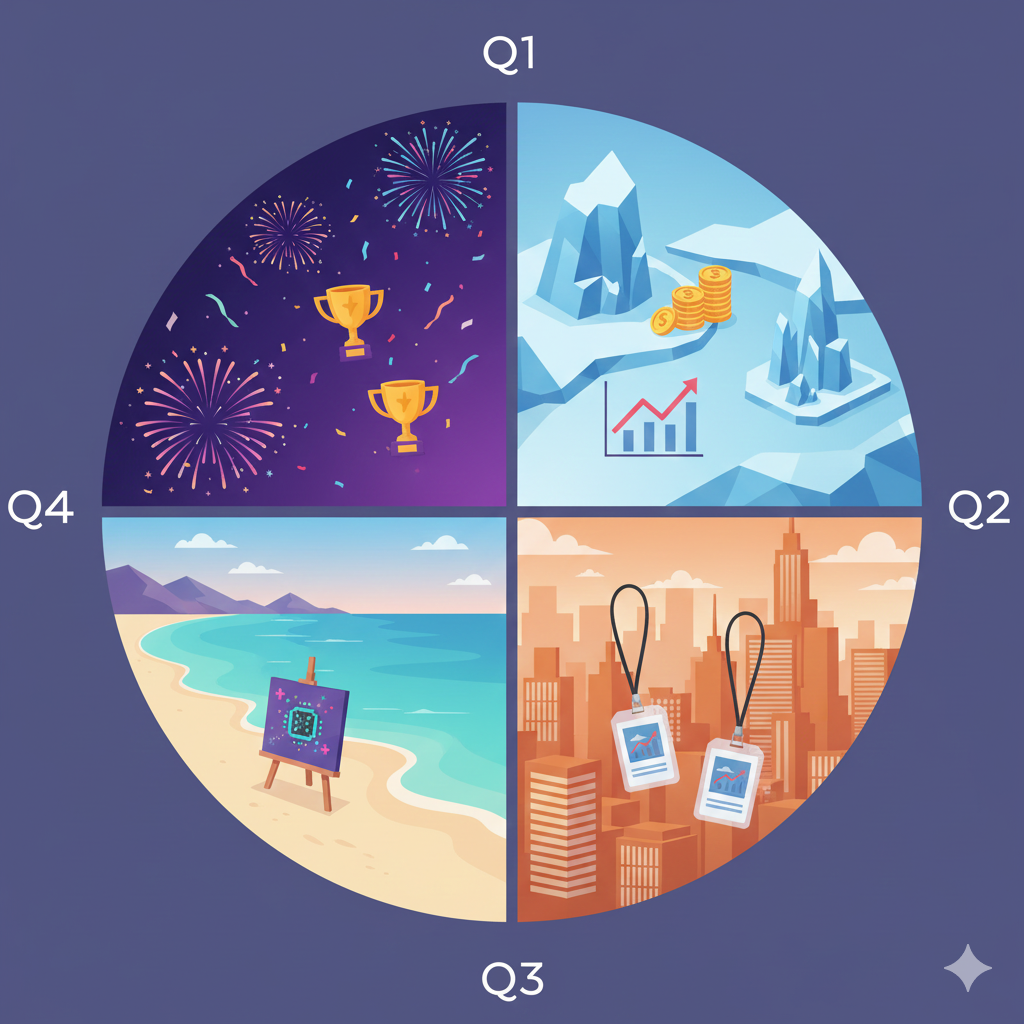
Synthesizing these trends, we can construct a strategic calendar for 2025. Use this as a dynamic framework, not a rigid rulebook, and always cross-reference with real-time data.
🧭 Q1 (January – March): The High-Liquidity Launchpad
Character: A period of renewed energy, portfolio rebalancing, and fresh capital inflows.
Best For: Ambitious PFP projects, large generative collections, high-profile collaborations, and ecosystem-focused foundational drops.
Key Events: New Year market rotation, ETHDenver (February), potential airdrop seasons for scaling solutions, the kick-off of new marketplace reward cycles.
Recommended Strategy: Strike early. Launch in January or February to capture collectors while they are energized, have refreshed budgets, and are actively seeking new assets for the year ahead.
☀️ Q2 (April – June): Momentum and Experimental Energy
Character: A period of building momentum, often fueled by spring conferences and pre-summer optimism.
Best For: Innovative and experimental art forms (AI, dynamic NFTs), mid-sized collections, and projects with strong narrative ties to current tech trends.
Key Events: NFT.NYC (April), other global meetups, consistent marketplace engagement, and often a pre-summer market uptick.
Recommended Strategy: Leverage the spring hype cycle. Time your drop to coincide with or immediately follow major industry gatherings to tap into the concentrated narrative energy and networked audience.
🌴 Q3 (July – September): The Quiet Advantage
Character: The traditional summer slowdown, with lower overall volume but reduced competition for attention.
Best For: Solo artists, 1/1 and small-edition releases, photography, and conceptually dense projects that benefit from deeper collector focus.
Key Events: ETHCC (July), potential lulls in broader crypto activity, ongoing L2 migrations and testnet deployments.
Recommended Strategy: Embrace the calm. This is an ideal time for artists to shine, as the signal-to-noise ratio improves. Collectors are more deliberate, and high-quality work can stand out without being drowned out by mega-drops.
🔥 Q4 (October – December): The Major Cycle Climax
Character: The most historically active and often lucrative quarter, driven by year-end dynamics and major events.
Best For: Major platform launches, expansive ecosystem collections, gaming asset releases, and any project aiming for a landmark, year-defining drop.
Key Events: Devconnect, Art Basel Miami (December), the culmination of annual marketplace reward programs, and pre-holiday liquidity injections.
Recommended Strategy: Go big or go home. Q4 is tailored for ambitious, well-funded projects with established communities. The market's capacity for absorption is at its peak, making it the perfect time for releases designed to make a significant impact.
A Practical, Actionable Framework for Your Next Drop
Theory is essential, but execution is everything. Here is a step-by-step framework to implement a seasonal strategy:
🌐 The Pre-Launch Reconnaissance (4 Weeks Out):
Dive into on-chain and social data. Analyze trading volume trends in your chosen niche and chain. Assess the floor price stability of comparable projects. Use wallet analysis tools to gauge current collector sentiment. If the data shows high volatility or a clear downturn, consider a tactical delay of 2-3 weeks.
📣 The Phased Marketing Rollout (10-14 Days Out):
Begin your pre-launch campaign in earnest. Utilize a mix of content: artistic sneak peeks, behind-the-scenes process videos, scheduled Twitter Spaces or Farcaster channels for AMAs, and curated allowlist registrations. Crucially, do not announce your final mint date too early to avoid hype fatigue. Under-promise on speculative utilities and over-deliver on art and community.
🗓 The Strategic Date Selection (1 Week Out):
Finalize your launch day and time. Data consistently shows Tuesdays through Thursdays outperform weekends, as collectors are in a more engaged, weekday mindset. Actively avoid dates where competing major drops are scheduled or that fall on holiday eves. Your goal is to own the daily narrative.
🏁 The Controlled Launch Execution (Mint Day):
Structure your mint to sustain momentum. Consider a phased approach: allowlist mint first to reward your core community, followed by a public sale. Keep the total supply reasonable and justified by your community size to avoid immediate post-mint dilution. Most importantly, be hyper-engaged across all channels on launch day—community management in the first 24 hours sets the tone for the project's entire lifespan.
Conclusion: Timing as a Foundational Creative Skill
In the evolved landscape of 2025, releasing an NFT collection is a strategic performance synchronized with the market's inherent rhythms. It is a deliberate dance between internal creative readiness and external cyclical patterns—liquidity flows, social sentiment, collector behavior, and platform incentives. The creators who internalize this discipline, who respect timing not as an afterthought but as a core component of their craft, will consistently find greater traction, stability, and success than those who rely on artistic merit alone.
Your art defines your project's soul, but your timing determines its reception. In the competitive symphony of Web3, ensure you drop not when you are ready, but when the market is poised to listen. Master the season, and you master your destiny.
NFT Birdies
NFT Birdies
30 Mar 2026

NFT Birdies
17 Mar 2026
Build authority in Web3 - share your insights on our blog!
Become our guest authorGot a cool idea for NFTBirdies?
Drop your thoughts and help us build the best NFT platform together.
Drop Your IdeaTopics
Recent comments

Share your review
Article: Seasonal NFT Strategy: Mastering Market Cycles for Optimal Drops in 2025