

NFT Birdies
20 Mar 2026
Pokémon Pokopia Review: A Bold Spin-Off That Rebuilds the Pokémon World
A Pokémon Experience That Breaks Tradition
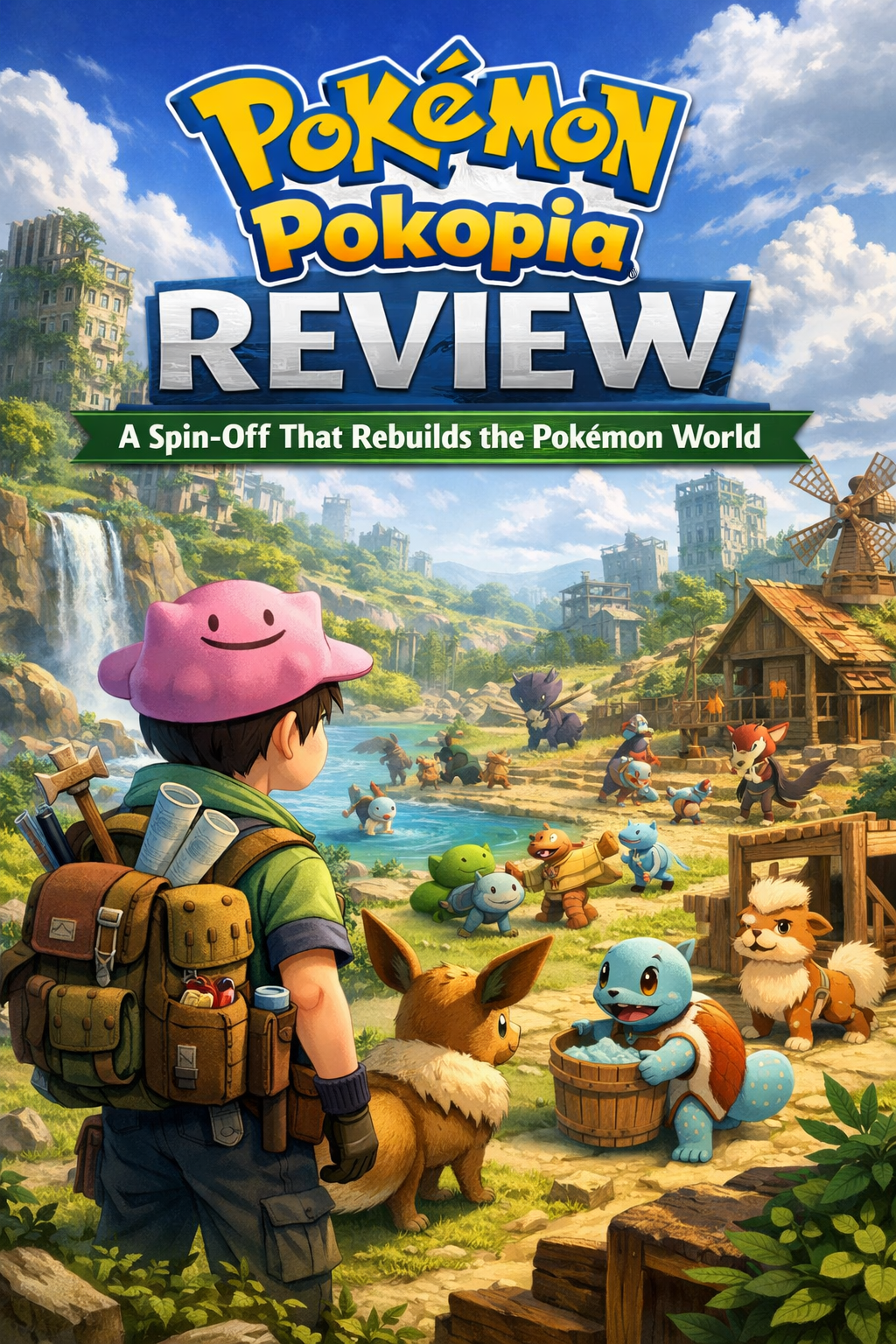
Let’s be honest: the most memorable Pokémon spin-offs stand out because they do more than just drop familiar characters into a different genre. Pokémon Snap worked because it offered a fresh point of view. Pokémon Mystery Dungeon resonated thanks to its emotional storytelling. Pokopia follows that same path by asking a bold question: what happens when humans vanish, leaving Pokémon behind to rebuild the world?
Created through a partnership between Game Freak and Omega Force (best known for Dragon Quest Builders 2), Pokopia lands on the Nintendo Switch 2 as one of the most confident and polished Pokémon titles in recent memory.
Gameplay
Pokopia truly shines through its gameplay systems. You play as a Ditto who awakens in an abandoned world, takes on the appearance of a missing human companion, and begins restoring civilization from the ground up. Gathering materials, constructing shelters, crafting tools, and inviting wild Pokémon into your growing settlement form the core loop. While it starts off simple and approachable, the depth that unfolds over time is surprisingly rich.
Players familiar with Dragon Quest Builders 2 will recognize the blueprint-style building, but Pokopia takes it further by tying construction directly to ecosystem management and Pokémon recruitment. Want Water-type Pokémon to settle nearby? You’ll need to design the right environment in the proper location. Looking to unlock advanced crafting options? Certain Pokémon must join your team to make it possible. These mechanics interlock seamlessly, creating a system that feels organic rather than forced.
Tip
Take your time when establishing early habitats. The Pokémon you attract early will influence which crafting paths open later. Building a diverse set of environments early on can make a big difference as you progress.
Resource gathering is consistently satisfying. Watching a lifeless world transform into a lively community—filled with Pokémon going about their own routines—delivers a rewarding sense of progression, similar to building out an island in Animal Crossing but with added strategic depth. Even after dozens of hours, there’s still more to uncover, highlighting just how layered the experience is.
That said, the late game does lose some momentum. Progress begins to hinge more on repetitive material collection, and the pacing slows noticeably as the main mystery starts to resolve. For some players, the gameplay loop may feel a bit too familiar before the journey concludes.
Graphics and Audio
Visually, Pokopia brings a refreshing level of personality to the Pokémon world. The post-human setting allows for imaginative environments, from nature reclaiming old ruins to vibrant landscapes slowly shaped by your efforts. On the Switch 2, the game runs smoothly and features a noticeable step up in detail compared to earlier entries.
The sound design is equally impressive. Each Pokémon contributes unique ambient sounds tied to its behavior, and the overall audio evolves as your settlement grows. The soundtrack strikes a warm, slightly nostalgic tone that fits perfectly with the game’s atmosphere and remains pleasant even during long sessions.
Story and World
This is where Pokopia truly stands apart. Playing as a Ditto impersonating a missing trainer in a world without humans creates a quiet but powerful narrative foundation. The mystery of what happened unfolds gradually, encouraging exploration and discovery at every turn.
While the writing doesn’t aim to be groundbreaking, it’s sincere, occasionally lighthearted, and consistently respectful of the player’s experience. Rather than treating the world as a backdrop for objectives, the game invites you to see it as something meaningful to explore. It’s approachable for newcomers and younger players, yet still offers enough complexity to keep experienced players engaged for well over 100 hours.
Verdict
Every Pokémon spin-off faces the same question: does it stand on its own, or does it rely on the strength of the brand? Pokopia answers confidently. It’s a carefully designed life-simulation experience that incorporates Pokémon in a way that feels purposeful, drawing clear inspiration from games like Dragon Quest Builders and Animal Crossing.
If you enjoy a gradual, sandbox-style experience filled with discovery, you’ll likely find it hard to put down. If repetitive grinding isn’t your thing or you prefer a clearly defined ending, the slower late-game pacing might test your patience. And if you’re looking for a traditional Pokémon RPG, this won’t quite scratch that itch.
Still, as an example of how the franchise can evolve when it embraces new ideas, Pokopia stands out as one of the most compelling spin-offs in years.
Pokémon Pokopia Review
Pokopia feels like the kind of idea that should have existed long ago. By combining Game Freak’s vision with the developers behind Dragon Quest Builders 2, this spin-off delivers something genuinely fresh while staying true to the spirit of Pokémon. Taking control of a Ditto rebuilding a world after the disappearance of both humans and Pokémon is an immediately intriguing concept—and one that feels more ambitious than recent mainline entries.
For players who value creativity, exploration, and a slower pace over traditional gym battles, this is an easy recommendation. However, those who prefer structured RPG mechanics and turn-based combat may find it unfamiliar. For fans of games like Animal Crossing, Stardew Valley, or Minecraft, though, Pokopia is a standout title and one of the highlights of the Nintendo Switch 2 library.
Pros
Satisfying loop of habitat building and Pokémon recruitment
Unique concept centered around playing as a Ditto
Successfully blends sandbox and life-sim elements without imitation
Rich in charm, mystery, and exploration
Deep systems that reward long-term play
Cons
Late-game progression leans heavily on grinding
Lacks the traditional battle mechanics some fans expect
Slower pacing may not appeal to players seeking constant action
NFT Birdies


NFT Birdies
26 Mar 2026

NFT Birdies
9 Apr 2026

NFT Birdies
8 Apr 2026

Build authority in Web3 - share your insights on our blog!
Become our guest authorGot a cool idea for NFTBirdies?
Drop your thoughts and help us build the best NFT platform together.
Drop Your IdeaTopics
Recent comments

Share your review
Article: Pokémon Pokopia Review: A Bold Spin-Off That Rebuilds the Pokémon World