

NFT Birdies
12 Dec 2025
NFT Smart Contract Security: The 2025 Survival Guide for Avoiding Million-Dollar Mistakes
Your Code is Your Fortress. Is It Defended?

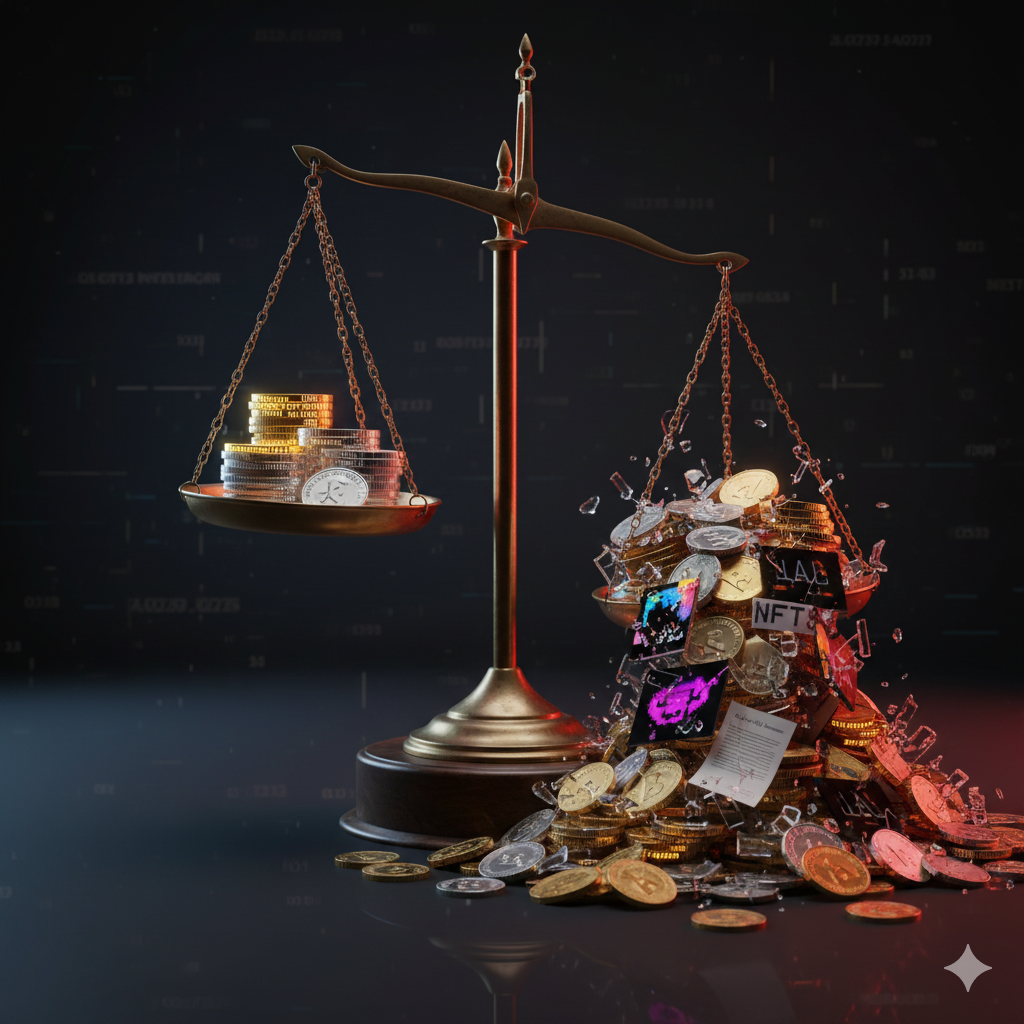
Imagine this: You've spent months crafting the perfect NFT collection. The art is stunning, the community is buzzing, and the mint day arrives. In a euphoric 60 minutes, your project sells out, securing millions in the treasury. Then, 72 hours later, it’s all gone. Not due to market volatility, but because of a single, overlooked line in your smart contract that allowed a hacker to drain every last Ether. This isn’t a nightmare scenario—it’s a recurring headline in Web3.
In 2025, the stakes for NFT smart contract security are higher than ever. We’re no longer just protecting JPEGs; we’re safeguarding complex ecosystems of generative art, gaming assets, royalty streams, and decentralized autonomous organizations (DAOs). A vulnerability isn't just a bug; it’s an existential threat to your project, your community’s trust, and your financial future.
This guide is your blueprint for navigating the treacherous waters of smart contract development. We’ll move beyond fear and dive into actionable strategy: the non-negotiable practice of audits, the most common and costly vulnerabilities to avoid, and a comprehensive set of security protocols for 2025. Consider this your first and most important investment—before a single line of code is written.
Part 1: The Unbreakable Pact - Why Audits Are Non-Negotiable in 2025-2026
Deploying an unaudited smart contract in 2025 is the digital equivalent of constructing a skyscraper without an engineer’s inspection. It might look finished, but the first major storm will reveal its fatal flaws.
What a Professional Audit Actually Does
A security audit is a systematic, expert review of your smart contract’s source code with one goal: to find and categorize vulnerabilities before malicious actors do. It’s not a guarantee of perfection, but it’s the closest thing to one in this space.
A comprehensive audit examines:
Logic Flaws: Does the contract behave exactly as intended under all conditions?
Vulnerability Patterns: Reentrancy, overflow/underflow, access control issues.
Gas Optimization: Inefficient code that costs your users more and can create attack vectors.
Code Quality & Style: Is the code maintainable and follow established standards (like Solidity style guide)?
Protocol & Integration Risks: How does the contract interact with oracles, bridges, or other DeFi protocols?
The 2025-2026 Audit Process: From Start to Finish
Selection: Choose a reputable firm with a proven track record in NFT-specific contracts. Look for public audit reports on projects you respect.
Scope & Agreement: Define what’s being audited (e.g., the core minting contract, staking contract, marketplace). Get a clear timeline and cost.
The Audit Itself: The firm uses a combination of:
Manual Review: Senior engineers "read" every line of code.
Automated Analysis: Tools like Slither, MythX, or Foundry’s invariant testing to flag common patterns.
Formal Verification: For critical functions, mathematically proving the code's correctness (becoming more common in 2025).
Report & Remediation: You receive a detailed report listing vulnerabilities by severity (Critical, High, Medium, Low, Informational). You then fix the issues.
Final Verification: The auditor reviews the fixes to ensure they are implemented correctly. Only then is the contract ready for deployment.
Best Practice 2025-2026: Budget for at least two independent audits for any contract holding significant value. A second set of eyes catches what the first might miss.
Part 2: The Hall of Shame - Most Common and Costly NFT Contract Vulnerabilities
Let’s dissect the enemies at the gate. Understanding these is half the battle.
🚨 1. Reentrancy Attacks (The Classic Killer)
What it is: A malicious contract calls back into your vulnerable function before the initial execution finishes, potentially draining funds in a loop. The infamous DAO hack in 2016 was a reentrancy attack.
NFT Context: Could allow an attacker to mint unlimited NFTs for the price of one or drain funds from a treasury or staking pool.
The 2025 Fix: Use the Checks-Effects-Interactions pattern and employ reentrancy guards (like OpenZeppelin’s ReentrancyGuard) as a standard practice.
🚨 2. Access Control Failures (The Royalty Heist)
What it is: Critical functions (like withdrawTreasury, setRoyaltyAddress, pauseMinting) are not properly restricted, allowing anyone to call them.
NFT Context: An attacker could withdraw all mint proceeds, redirect royalty fees to their own wallet, or permanently pause your project.
The 2025 Fix: Use OpenZeppelin’s Ownable or role-based access control (AccessControl) for every function that changes state. Implement multi-signature (multisig) wallets for treasury access.
🚨 3. Integer Overflow/Underflow (The Supply Glitch)
What it is: Solidity versions prior to 0.8.0 didn’t automatically check math. An operation could make a number wrap around (e.g., 0 - 1 = 2^256 - 1), creating massive, fake token balances.
NFT Context: Could allow minting beyond the maxSupply or create absurd token IDs.
The 2025 Fix: Always use Solidity 0.8.x or later, which has built-in safe math. For older code, use libraries like SafeMath.
🚨 4. Frontrunning and Race Conditions (The Priority Gas Auction)
What it is: Bots monitor the mempool for pending transactions (like a rare NFT mint) and submit their own transaction with a higher gas fee to be processed first.
NFT Context: Makes fair mints impossible for regular users. Bots snipe all rare traits or limited items.
The 2025 Fix: Implement commit-reveal schemes, use ERC-721A for gas-efficient batch minting to reduce bot advantage, or utilize private mempools (like Flashbots). For drops, consider allowlist mechanisms and randomized reveals.
🚨 5. Insecure Randomness (The Predictable "Rare")
What it is: Using predictable on-chain data (like block.timestamp, blockhash) to generate "random" traits for generative NFTs.
NFT Context: Miners or sophisticated bots can predict or manipulate the outcome, guaranteeing themselves the rarest NFTs.
The 2025 Fix: Use a decentralized oracle like Chainlink VRF (Verifiable Random Function) for provably fair and tamper-proof randomness. For lower-stakes projects, commit-reveal with a final off-chain seed is acceptable.
🚨 6. Metadata and Centralization Risks (The Broken Image)
What it is: Storing critical metadata (images, traits) on a centralized server you control (https://myapi.com/token/1). If your server goes down or you change the data, the NFT breaks.
NFT Context: Your million-dollar collection turns into a set of broken links. See the early lessons of "Cloudflare incident" projects.
The 2025 Fix: Use decentralized storage like IPFS or Arweave for all immutable metadata. The tokenURI should point to a decentralized hash (e.g., ipfs://QmXyZ...).
Part 3: The 2025-2026 Security Protocol - A Step-by-Step Checklist for Creators
Security is a process, not a one-time event. Follow this lifecycle.
Phase 1: Pre-Development (The Foundation)
Set a Security Budget: Allocate 10-20% of dev budget for audits, bug bounties, and monitoring tools.
Choose Established Standards: Use ERC-721A (for efficient minting), ERC-1155 (for games), or other battle-tested, community-reviewed standards. Avoid writing a token contract from scratch.
Leverage Secure Libraries: Rely on OpenZeppelin Contracts for access control, security, and utilities. They are peer-reviewed and time-tested.
Phase 2: Development & Testing (The Build)
Write Tests Relentlessly: Aim for 95%+ test coverage. Use a framework like Hardhat or Foundry, which allow you to simulate complex attacks and forking mainnet state.
Implement Static Analysis: Run Slither or MythX on every commit to catch low-hanging fruit early.
Use a Multi-Sig Dev Wallet: No single person should control the private key for the contract deployment wallet.
Phase 3: Pre-Launch (The Final Check)
Conduct Professional Audits: As outlined above. Do not skip this.
Initiate a Bug Bounty: Platforms like Immunefi or Sherlock allow you to incentivize white-hat hackers to find vulnerabilities you and the auditors missed. Start with a critical bug bounty worth a significant portion of your treasury.
Deploy to a Testnet First: Perform a full, community-involved test mint on Goerli, Sepolia, or a relevant L2 testnet.
Plan for Upgrades & Pauses: Have a secure, audited upgrade path (via proxies) or an emergency pause function controlled by a multisig. Know how to use it.
Phase 4: Post-Launch (Vigilance)
Monitor Religiously: Use services like Tenderly, OpenZeppelin Defender, or Forta to monitor for suspicious transactions and contract events in real-time.
Have an Incident Response Plan: What are the steps if an exploit is detected? Who communicates to the community? How are funds recovered or frozen? Plan for the worst.
Decentralize Control: Over time, transition key administrative functions (like treasury management) to a community DAO to reduce single points of failure.
The Future Frontier: AI Audits & Zero-Knowledge Proofs
Looking ahead, 2025 will see the rise of:
AI-Powered Audit Assistants: Tools that can suggest more secure code patterns and detect novel vulnerability classes.
ZK-Proofs for Privacy & Verification: Using zk-SNARKs to verify the correctness of a contract's state transition without revealing all data, enhancing both security and privacy for collectors.
Final Word: Security is Your Brand's Most Valuable Trait
In the trustless world of Web3, security is the ultimate trust signal. A project that invests openly in rigorous audits, transparently communicates its safety measures, and has a plan for the unexpected isn’t just protecting code—it’s building an unshakable reputation.
Your smart contract is the immutable heart of your NFT project. Before you dream of mooning floor prices, ensure that heart is armored, monitored, and resilient. The cost of prevention is always a fraction of the cost of a cure that may not exist.
Your Security Mantra for 2025-2026: Audit. Test. Monitor. Decentralize. Repeat. Now go build something secure
NFT Birdies

NFT Birdies
17 Mar 2026
Julie Guay
16 Mar 2026
NFT Birdies
26 Mar 2026
Build authority in Web3 - share your insights on our blog!
Become our guest authorGot a cool idea for NFTBirdies?
Drop your thoughts and help us build the best NFT platform together.
Drop Your IdeaTopics
Recent comments

Share your review
Article: NFT Smart Contract Security: The 2025 Survival Guide for Avoiding Million-Dollar Mistakes