
NFT Birdies
17 Mar 2026
Generative Art Algorithms: Coding Your Own NFT Collection
There is a moment in the creative process that every artist knows but few can articulate - the point at which intention meets accident, where the thing you are making begins to surprise you. For centuries, that surprise was mediated by the hand, by the unpredictable physics of paint on canvas, by the grain of paper or the chemistry of film. In generative art, the mediator is code. And when that code is connected to a blockchain, the result is not merely a digital image but a permanent, ownable artifact whose very existence is proof of a unique computational event.
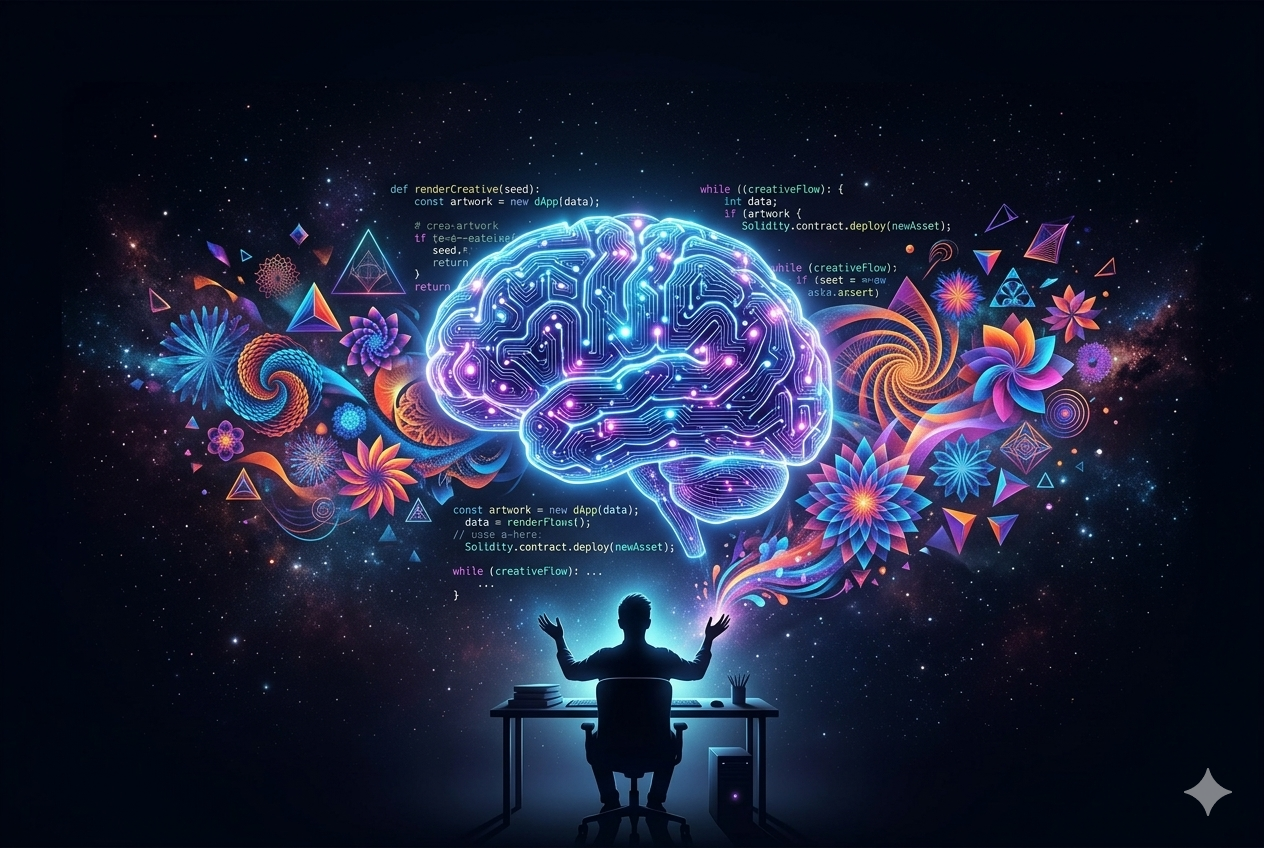
The intersection of generative art and NFTs represents one of the most intellectually fertile territories in the entire Web3 landscape. It is a space where programmers become painters, where algorithms replace brushes, and where collectors acquire not just visual objects but the logic that produced them. This is not art about technology; it is art that is, at its core, technology made manifest. And for those willing to learn its language, it offers a creative frontier as vast and unexplored as any in human history.
The Nature of Generative Art
To understand generative art is to first let go of the notion that the artist's role is to produce finished objects. The generative artist produces systems. They write code that defines a space of possibilities - a set of rules, constraints, and probabilities - and then they set that system in motion, allowing it to generate unique outputs within the boundaries they have defined. The artist does not paint ten thousand pictures; they paint one algorithm, and the algorithm paints the ten thousand variations.
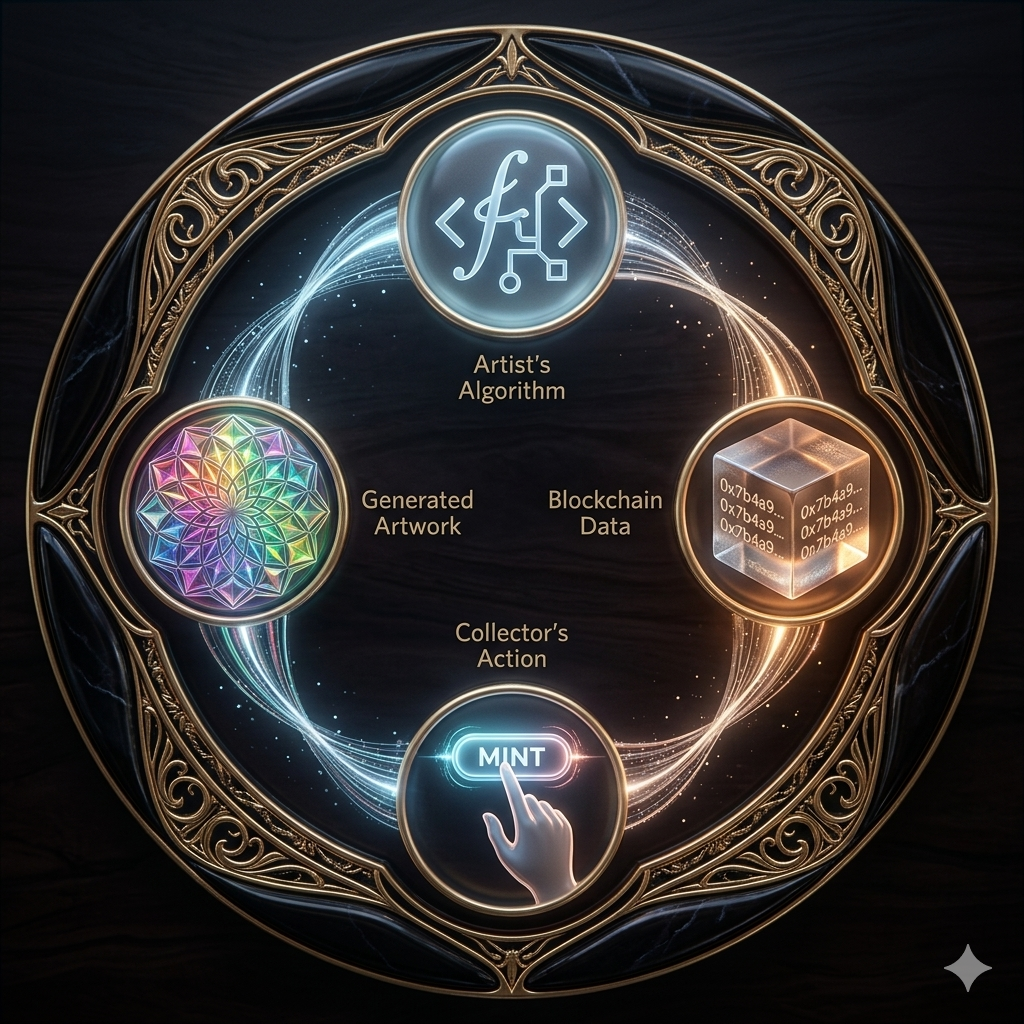
This distinction is fundamental. When you create a generative art collection for the NFT space, you are not creating individual images in the traditional sense. You are creating a mechanism that produces images, each one distinct, each one determined by a combination of your design choices and inputs that are outside your control - a wallet address, a block hash, a timestamp, or simply the pseudo-random number generator at the heart of your code. The collector who mints your work is not just buying a picture; they are collaborating with your algorithm to produce something that has never existed before and will never exist again.
The history of this practice extends back decades, long before blockchain entered the conversation. Artists like Vera Molnár, Manfred Mohr, and Frieder Nake began writing code to generate drawings as early as the 1960s, working with plotters and mainframes that occupied entire rooms. The contemporary explosion of generative art NFTs is not an invention but a renaissance - a convergence of long-established artistic practice with the ownership and provenance capabilities of decentralized technology. What was once a niche pursuit accessible only to those with access to expensive computing infrastructure has become a global movement, and the tools for participation have never been more accessible.
The Instrumentarium: Tools for the Generative Artist
The generative artist's workbench is diverse, spanning programming languages, creative coding frameworks, blockchain development toolkits, and increasingly, AI-powered platforms that abstract away some of the technical complexity. The choices you make among these tools will shape not only your workflow but the very nature of the art you can produce.
At the foundation lies the code itself. While any general-purpose programming language can theoretically generate images, the ecosystem has consolidated around a few key options. JavaScript, particularly in conjunction with the p5.js library, remains the most accessible entry point for artists new to coding. The framework, originally developed by Lauren McCarthy and inspired by the seminal Processing language, provides intuitive functions for drawing, animation, and interaction, all running in the web browser. For generative art that will be minted on platforms expecting web-based rendering, p5.js is often the natural choice.
For those seeking greater performance and more sophisticated visual capabilities, the combination of WebGL and frameworks like Three.js opens the door to three-dimensional generative work. Here, the artist is not limited to two-dimensional shapes and colors but can manipulate geometry, lighting, and texture in virtual space, producing outputs that verge on the sculptural. The computational demands are higher, but the expressive range is correspondingly vast.
At the other end of the spectrum lie node-based visual programming environments like TouchDesigner, which allow artists to construct generative systems through graphical interfaces rather than textual code. While less common in the NFT space due to challenges around web distribution, these tools have their devotees, particularly among artists working with real-time video and interactive installation.
The blockchain layer introduces its own set of requirements. Most generative art NFT platforms expect projects to be packaged as self-contained web applications - HTML, JavaScript, CSS, and any necessary assets bundled together and uploaded to decentralized storage. The platform Highlight has developed a particularly elegant approach to this, providing a dedicated JavaScript library called hl-gen.js that gives artists access to blockchain data and deterministic randomness methods . When a collector mints a token on Highlight, the artist's code runs in their browser, using the transaction data as seeds to generate the unique output that will become the permanent NFT.
This model, often called "fully on-chain generative art," represents the purest expression of the medium's potential. The artwork does not exist as a pre-rendered image stored somewhere; it exists as code that renders itself anew each time it is viewed. The distinction between the work and its representation collapses. To own the NFT is to own the generative logic itself.
Constructing the Generative Algorithm
The heart of any generative art project is the algorithm that produces individual outputs. Designing this algorithm requires thinking simultaneously like an artist and like an engineer—balancing aesthetic intention with computational constraints, creating systems that are complex enough to generate meaningful variation but constrained enough to cohere as a collection.
The first decision concerns the source of variation. In deterministic generative systems, every output is fully determined by a set of input seeds. The same seeds will always produce the same image. This determinism is essential for verifiability on the blockchain—collectors need to know that the artwork they view today is identical to the one they minted months ago—but it requires careful management of randomness. The JavaScript Math.random() function, which produces different values each time a program runs, is useless for this purpose. Instead, generative artists use seeded pseudo-random number generators that produce repeatable sequences based on initial seeds derived from blockchain data.
The hl-gen.js library provides a suite of methods specifically designed for this use case. The hl.random() function generates deterministic random numbers seeded by the transaction hash and token ID, ensuring that each token renders identically every time while remaining unpredictable at minting time . Similarly, hl.randomInt(), hl.randomBool(), and hl.randomElement() give artists fine-grained control over probabilistic outputs - controlling the likelihood of certain traits appearing, selecting randomly from arrays of colors or shapes, or introducing binary decisions that branch the generative tree.
Consider a simple example: a generative portrait collection. Your algorithm might define parameters for face shape, eye color, hairstyle, and background texture. Using hl.randomElement(), you select from arrays of possible values for each trait. Using hl.randomBool(0.3), you give certain rare traits a thirty percent chance of appearing. The combination of these choices produces a vast space of possible outputs - tens of thousands of unique portraits - all generated from a few dozen lines of code.
More sophisticated algorithms introduce interaction between parameters. The color palette for one element might be determined by values chosen for another. Geometric transformations might compound, producing recursive complexity. Physical simulations - particle systems, flocking behaviors, wave equations—can generate organic forms that emerge from simple rules. The generative artist's palette is not colors and brushes but variables and functions, loops and conditionals.
The Blockchain Dimension: Randomness and Provenance
Connecting generative art to the blockchain adds layers of meaning and mechanism that extend far beyond mere provenance. The same infrastructure that enables secure ownership also provides sources of entropy that can become integral to the artistic process.
The Chainlink VRF (Verifiable Random Function) represents one sophisticated approach to this integration. Unlike the pseudo-random number generators available within smart contracts, which are ultimately deterministic and potentially manipulable, Chainlink VRF produces randomness that is verifiably unbiased and tamper-proof . An artist designing a collection on Ethereum might use VRF to determine trait distributions at minting time, with the randomness source itself becoming part of the artwork's provenance.
The tutorial from Chainlink demonstrates this pattern in practice, walking through the creation of a generative dog breed collection where each NFT's characteristics are determined by verifiable random numbers . The smart contract requests randomness from Chainlink, receives it through a callback, and uses it to select from arrays of token URIs stored on IPFS. The result is a collection where the distribution of traits is provably fair - no single actor, not even the artist, can influence which wallets receive which outputs.
This transparency is philosophically aligned with the generative art ethos. If the art is about surrendering control to a system, then the system should be open to inspection. Collectors should be able to verify that the probabilities you advertised match the actual distribution. The blockchain makes this possible in ways that traditional generative art never could.
The data available from the blockchain extends beyond randomness. The hl-gen.js library exposes a rich set of information through its hl.tx object, including the minting wallet address, token ID, block timestamp, gas price, and more . An artist could incorporate the timestamp into their algorithm, producing outputs that vary by time of day or season. They could use the wallet address to generate colors or patterns unique to each collector. They could even reference gas prices as inputs, creating artworks that memorialize the cost of their own creation.
This integration transforms the minting event from a mere transaction into an integral part of the artistic process. The blockchain is not just the registry where ownership is recorded; it is a collaborator in the creation.
From Algorithm to Collection
A single generative output is a curiosity. A collection of thousands, each unique yet recognizably part of a coherent whole, is a statement. The transition from writing an algorithm to launching a collection requires attention to dimensions that the solo coder might otherwise overlook.
Metadata is one such dimension. Each NFT in a collection needs not only its visual representation but structured data describing its attributes. This metadata, stored in JSON format and typically hosted on IPFS or Arweave, enables marketplaces to display trait information and collectors to filter and sort. The QuickNode guide to creating NFT collections demonstrates the complete pipeline: generating images, constructing metadata, uploading to IPFS, and pinning for permanent availability . The process is mechanical but essential - sloppy metadata undermines the collector experience and can obscure the very variations your algorithm worked so hard to produce.
The economics of generative collections also differ from traditional 1/1 art. Because the artist does not control which outputs go to which collectors, the secondary market becomes a discovery mechanism. Rare traits find their natural price levels through trading. The artist, if they have programmed royalties into their smart contract, participates in this ongoing valuation. This alignment of incentives—the artist benefits when the collection appreciates—creates a healthier long-term relationship than the one-time sale model.
Technical considerations around gas costs and minting mechanics also warrant attention. Complex generative algorithms can be expensive to execute on-chain, particularly on Ethereum mainnet during periods of high demand. Many projects opt for a hybrid model: the generative algorithm runs off-chain, with only the final output and proof of generation recorded on-chain. Others build on layer-2 solutions or alternative layer-1s where computation is cheaper. The choice involves trade-offs between decentralization, cost, and user experience that each artist must navigate based on their priorities.
The Evolution of the Form
Generative art is not static, and neither are the tools used to create it. The past year has witnessed an explosion of AI-powered platforms that are reshaping what is possible, particularly for artists who may not have deep coding backgrounds.
Colle AI represents one vision of this future, positioning what it calls "intelligent design" as the next evolution of NFT creation . The platform embeds adaptive AI systems directly into the creative pipeline, interpreting artistic intent and automatically handling technical concerns like metadata formatting, cross-chain compatibility, and deployment. For artists focused on conceptual direction rather than technical implementation, such tools lower barriers while expanding possibilities.
More specialized platforms are emerging as well. Zen Blocks, a project by artist Muhammet Altun, leverages the Render Network's decentralized computing power to create algorithmic sculptures of unprecedented complexity . By integrating blockchain data into Houdini, a high-end 3D animation software, and offloading rendering to distributed GPU nodes, Altun produces animated generative works that would be impossible to create on a single machine. The blockchain data from each collector's wallet influences the final form, creating a feedback loop between ownership and aesthetics.
These developments point toward a future where generative art encompasses not just static images but dynamic, evolving, and interactive experiences. The distinction between the artwork and its environment blurs. Collectors may find themselves not just owning art but participating in its ongoing creation.
The Artist's Responsibility
With new capabilities come new responsibilities. Generative artists operate at the intersection of multiple domains - visual design, software engineering, blockchain technology, and increasingly, artificial intelligence—and must navigate the ethical complexities of each.
There is the question of code quality. Bugs in generative algorithms can produce outputs that violate the artist's intentions or, worse, break entirely, leaving collectors with unusable assets. Rigorous testing across the full range of possible inputs is essential, yet often neglected in the rush to launch.
There is the question of provenance and attribution. When algorithms incorporate AI models trained on existing artworks, where does inspiration end and appropriation begin? The generative art community is still developing norms around these questions, and artists working in this space must engage with them thoughtfully.
And there is the question of sustainability. The computational demands of generative art, particularly when 3D rendering or AI inference is involved, carry environmental costs. Artists must weigh these against the value of their work and consider technologies and platforms that minimize unnecessary consumption.
Toward a Personal Practice
 For the artist ready to begin their generative journey, the path forward involves equal parts technical learning and artistic exploration. Start with the fundamentals: learn JavaScript and p5.js, experiment with simple shape generators, understand how seeded randomness differs from the uncontrolled variety. Study the work of pioneers and contemporaries alike—the Art Blocks archive alone contains years of generative evolution waiting to be absorbed.
When you feel ready to launch, platforms like Highlight provide streamlined paths from code to collection, handling the blockchain complexities while preserving creative control . The hl-gen.js library and its documentation offer concrete guidance for structuring your project, testing locally, and deploying to mainnet.
But the deeper work is interior. Generative art asks its practitioners to think differently about creativity itself—to find satisfaction not in the single perfect image but in the system that produces infinite variation. It rewards patience, iteration, and the willingness to be surprised by your own creations. The algorithm you write will generate outputs you never anticipated, combinations of parameters you never considered, beauty you cannot claim to have intended.
That is the gift of the form. You are not the sole author of your work; you are the architect of a space in which countless works can exist. The collector who mints your NFT becomes, for a moment, your collaborator. And the blockchain remembers it all - every variation, every transaction, every small act of creation propagated across an immutable ledger.
The code is yours. The outcomes belong to the world. That tension, generative and generative, is the art itself.
NFT Birdies
NFT Birdies
31 Mar 2026
NFT Birdies
30 Mar 2026
NFT Birdies
26 Mar 2026
Build authority in Web3 - share your insights on our blog!
Become our guest authorGot a cool idea for NFTBirdies?
Drop your thoughts and help us build the best NFT platform together.
Drop Your IdeaRecent comments

Share your review
Article: Generative Art Algorithms: Coding Your Own NFT Collection