

NFT Birdies
29 Dec 2025
Building Beyond Followers: The Next Generation of Web3 Community Platforms for Creators
The Evolution of Creator Communities: From Audiences to Ecosystems

The fundamental relationship between creators and their communities is undergoing its most significant transformation since the dawn of social media. For over a decade, the dominant model has been one of platform-mediated attention extraction, where creators build audiences on centralized platforms that ultimately own the relationship, control the distribution, and capture disproportionate value. This paradigm has created a generation of incredibly influential creators who nonetheless operate with remarkable fragility—their livelihoods subject to algorithmic shifts, policy changes, and the existential risk of platform obsolescence. Web3 introduces a fundamentally different architecture for community building, one built on principles of ownership, direct value exchange, and programmable coordination. This isn't merely about adding blockchain payments to existing community models; it's about reimagining the very structure of how creators and their supporters collaborate, create value together, and share in the outcomes of their collective efforts. The emerging toolkit of Web3 community platforms represents the infrastructure for this new social contract, enabling creators to transition from building disposable audiences on rented land to cultivating sovereign ecosystems where participation is recognized, contributions are rewarded, and membership carries tangible stake in the collective future.
The psychological and economic shift here cannot be overstated. Traditional creator communities are essentially broadcast networks with one-to-many communication and limited mechanisms for member-to-member connection or collaborative value creation. Web3-native communities are structured as networked ecosystems where the creator functions more as a founder or curator of a shared space, and members participate as stakeholders with varying levels of engagement, contribution, and ownership. This transforms passive consumption into active participation, and transforms fleeting attention into enduring alignment. The platforms enabling this shift aren't just technical tools; they represent new social primitives that allow for nuanced reputation systems, transparent governance, direct economic relationships, and verifiable contribution tracking—all operating without centralized intermediaries. For creators willing to navigate this new terrain, the potential is extraordinary: communities that are more resilient, more engaged, more economically sustainable, and capable of achieving far more ambitious collective goals than traditional fan bases. What follows is an exploration of the key platforms and protocols building this future, categorized by their primary function in the creator's community stack.
Foundational Infrastructure: The Protocol Layer of Web3 Communities
Before examining specific applications, it's essential to understand the protocol layer that makes Web3 communities structurally different. Unlike Web2 platforms that are monolithic and closed, Web3 community tools are often built on open, interoperable protocols. This means a community's social graph, reputation data, and membership tokens can potentially be used across multiple interfaces and applications, preventing lock-in and enabling innovation. The most significant protocol in this space is the Farcaster protocol, which provides decentralized social infrastructure. Farcaster isn't an app you use directly; it's a protocol upon which applications like Warpcast (a popular client) are built. What this means for creators is profound: when you build a community on a Farcaster client, you're building on a protocol where your social connections belong to you, not the application. If a better client emerges, your community can migrate without losing the foundational social layer. This represents a fundamental shift in power dynamics - creators are no longer building on platforms that can change the rules or disappear overnight; they're building on neutral infrastructure that multiple competing applications can access.
Complementing social protocols are identity and reputation protocols that allow for portable, verifiable social capital. Disco is pioneering this space with verifiable credentials that allow individuals to prove aspects of their identity or reputation across different applications without relying on centralized platforms. Imagine a creator being able to issue verifiable "Top Contributor" credentials to their most engaged community members, and those members being able to use that credential to get special access in other communities or applications. This creates a portable reputation layer that transcends any single platform. Similarly, Proof of Attendance Protocols (POAP) have evolved from simple event souvenirs into a rich tapestry of verifiable life experiences and contributions. A creator can issue POAPs not just for attending an event, but for completing a course, contributing to a collaborative project, or achieving certain milestones within the community. These tokens become a cryptographically verifiable resume of one's participation and skills within the creator's ecosystem. Together, these protocols form the plumbing of Web3 communities—often invisible to end-users but essential for creating communities that are resilient, interoperable, and owned by their participants rather than subject to the whims of corporate platforms.
Membership and Access Management: From Email Lists to Token-Gated Spaces
The most immediate application of Web3 for creators has been the transformation of membership models. Traditional membership platforms like Patreon operate on a subscription model where payment grants access, but the membership itself is merely a database entry on Patreon's servers. Web3 introduces token-gated membership, where holding a specific NFT or token in one's wallet functions as the key to access exclusive content, channels, events, or experiences. This simple shift has profound implications: membership becomes a liquid, ownable asset that members can theoretically trade or sell, aligning the community's success with the membership's value. More importantly, it allows for incredibly granular and automated access control that operates without centralized permissioning.
Highlight.xyz has emerged as a leader in this category, providing creators with no-code tools to create token-gated experiences. A musician can create an NFT that grants access to a private Discord channel, unreleased tracks, and presale codes for concerts. A writer can token-gate sections of their newsletter or research. The key innovation here is interoperability - the same token that grants Discord access via Collab.Land (another essential tool we'll discuss) could also grant access to a token-gated Zoom room for an AMA, or to a private website section. This creates a cohesive membership experience across the entire digital ecosystem of the creator. Guild is another pivotal platform in this space, though it operates slightly differently. Guild allows creators and communities to set up token-gating rules across Discord, Telegram, and other platforms, but it also functions as a discovery layer for token-gated communities. This is crucial for growth—instead of a community being locked behind a paywall that requires existing awareness, prospective members can browse Guild to find communities aligned with their interests and the tokens/NFTs they already hold. This turns membership from a marketing challenge into a discovery opportunity.
The sophistication of token-gating is rapidly advancing beyond simple "hold this NFT" checks. Platforms are enabling conditional logic based on token traits, holding duration, combination of assets, or even participation in on-chain activities. For example, a creator could set up a channel accessible only to those who have held their token for more than 90 days and have attended at least two virtual events (verified via POAP). This allows for the creation of tiered, meritocratic communities where access and privilege are earned through demonstrated engagement rather than just financial transaction. For creators, this means being able to cultivate an inner circle of truly dedicated supporters automatically, rewarding loyalty and contribution in transparent, programmatic ways that foster deeper connection and investment in the community's success.
Communication and Coordination: Decentralizing the Town Square
Every community needs a space for conversation, coordination, and spontaneous connection. In Web2, this has meant near-total reliance on Discord and Telegram—powerful tools that nonetheless centralize control and data. The Web3 response isn't necessarily to abandon these platforms, but to augment them with blockchain-native features that shift power dynamics and enable new forms of interaction. Collab.Land is perhaps the most widely adopted tool in this category, functioning as a bot that manages token-gated access within Discord and Telegram servers. While seemingly simple, its impact is transformative: it automates community moderation at the membership level, ensures that paid channels remain exclusive, and allows communities to scale without proportional increases in administrative overhead. More importantly, by linking Discord roles directly to on-chain assets, it creates a verifiable link between digital identity and community status that is transparent and resistant to manipulation.
However, the most ambitious developments are happening in truly decentralized communication protocols. Farcaster, mentioned earlier as a protocol, enables clients like Warpcast that offer a Twitter-like experience but with key Web3 advantages: ownership of one's social graph, resistance to censorship at the protocol level, and native integration with wallets and on-chain actions. For creators, building a presence on Farcaster means cultivating an audience that they truly own—if Warpcast were to disappear tomorrow, their followers and their content could seamlessly transition to another Farcaster client. This dramatically reduces platform risk. Furthermore, Farcaster's "Frames" feature allows any cast (post) to contain interactive, app-like functionality. A creator can share a cast that lets followers mint a new NFT, sign up for a newsletter, or register for an event without ever leaving their feed. This turns content distribution into direct action conduits, blurring the line between communication and transaction.
Beyond social feeds, decentralized community hubs are emerging. Kiosk, built by the original Mirror team, represents an evolution of the Web3 publication platform into a more social, community-oriented space. It combines elements of blogging, discussion forums, and token-gating into a cohesive experience where thoughtful conversation is incentivized and low-quality noise is discouraged. Similarly, Orb is building what it calls "clubhouses for token communities"—dedicated spaces that combine chat, content, events, and governance tailored for groups formed around shared ownership of an asset or belief. These platforms recognize that deep community connection requires more than broadcast communication or chaotic chat rooms; they need designed spaces for different modes of interaction, from curated long-form content to focused discussion threads to spontaneous voice chats, all woven together with the social and economic context that tokens provide. For creators, these tools offer the opportunity to build communities with richer, more varied forms of interaction than the one-dimensional channels of Discord, fostering deeper relationships and more substantive collaboration among members.
Collaborative Creation and Value Distribution: From Consumers to Co-Creators
The most transformative potential of Web3 communities lies in moving beyond consumption and discussion into genuine co-creation and shared ownership. Traditional creator economies are fundamentally extractive: fans pay to access the creator's output, but they don't participate in the creative process or share in the financial upside of the creator's growth. Web3 enables models where communities can be active participants in the creative journey and economic stakeholders in its outcomes. Mirror, despite its evolution, pioneered this concept with its crowdfunding and split functionality, allowing writers to fund projects with community contributions and automatically distribute ownership and revenue to backers. This model has expanded far beyond writing.
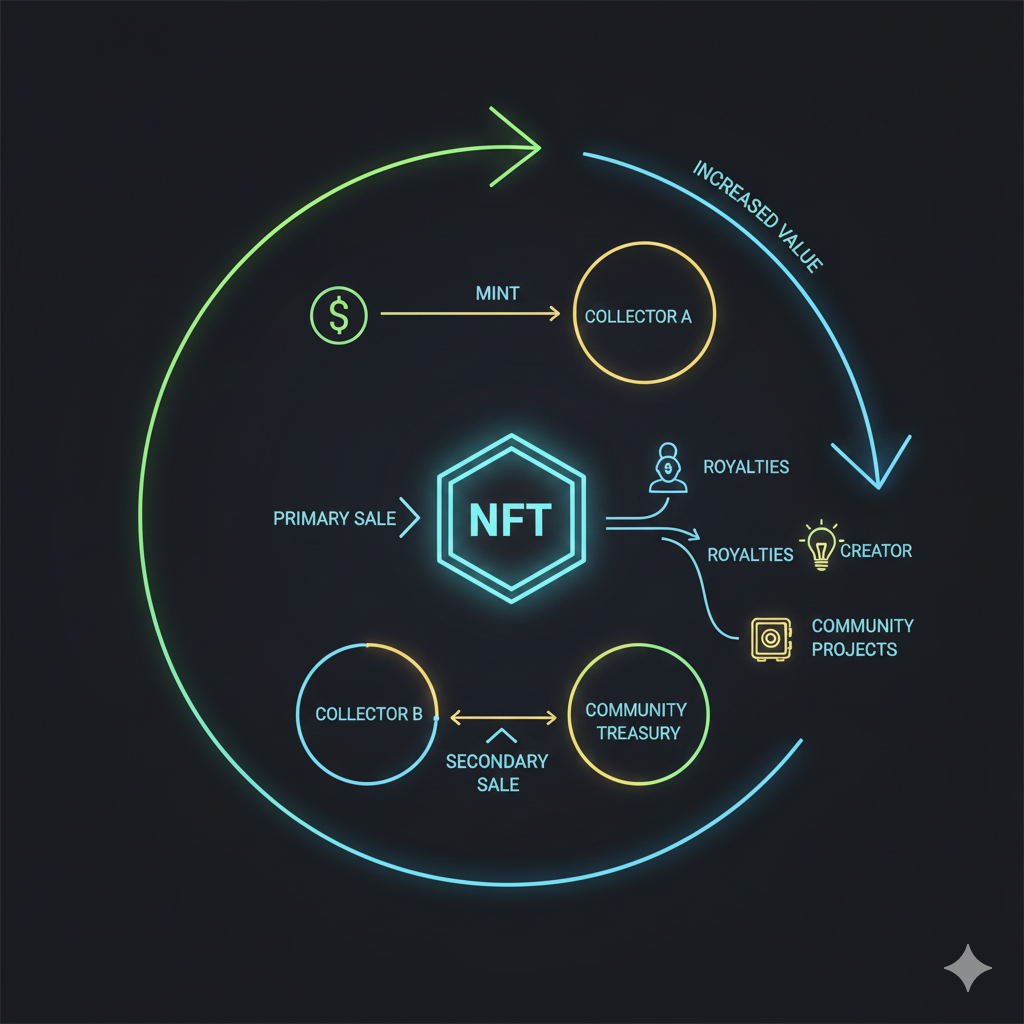
Zora has built a powerful protocol for creators to launch NFTs with built-in mechanisms for community ownership and ongoing participation. Their "Creator Rewards" allow creators to designate a portion of primary sales to be distributed to early collectors, aligning incentives from the start. More innovatively, their "Edition" model with open minting allows communities to collectively decide the scale and value of a release, creating dynamic, market-driven outcomes rather than fixed scarcity. This transforms a drop from a transactional event into a collaborative experiment between creator and community. Platforms like Manifold empower creators with advanced, customizable smart contract tools, enabling them to design unique engagement mechanics—like NFTs that evolve based on community voting, or that generate royalties for both the creator and a community treasury.
Perhaps the most significant development in this category is the rise of creator DAOs (Decentralized Autonomous Organizations). While not a single platform, the tooling for DAOs - like Syndicate for investment clubs, Coordinape for peer-to-peer reward distribution, and Llama for treasury management - enables creators to formalize their most engaged community members into a governance body that helps steer the creative direction and business decisions. A musician might form a DAO of top collectors who vote on setlists for a tour or decide how to use a community treasury funded by secondary sales royalties. A visual artist might have a DAO of holders who co-curate a physical exhibition. These structures move the community from the sidelines to the decision-making table, creating unprecedented levels of engagement and loyalty. The key insight is that when community members have authentic influence and shared upside, their participation transforms from casual support to invested partnership. They become marketers, collaborators, advisors, and ambassadors, not just consumers. The platforms enabling this are building the legal, financial, and organizational frameworks to make these complex collaborations manageable, transparent, and trustless.
Monetization and Sustainability: Building Economies, Not Just Revenue Streams
Ultimately, for creator communities to thrive long-term, they must be economically sustainable. Web2 models rely heavily on advertising, platform payouts, and direct subscriptions—all flows that are precarious and often misaligned with the creator's interests. Web3 introduces a broader palette of economic design tools that allow creators to build miniature economies around their work, with multiple, reinforcing revenue streams and value distribution mechanisms. Highlight, again, excels here by allowing creators to sell NFTs as membership keys, event tickets, or collectible art directly through beautiful, customizable storefronts that don't require coding. But the monetization goes deeper than primary sales.
The programmable royalty feature of NFTs means creators can earn a percentage of every secondary market sale forever. This aligns the community's speculative interest with the creator's long-term success—if collectors are betting on the creator's growth, the creator benefits directly from that betting activity. Platforms like Sound.xyz for musicians and Glass for photographers are building vertical-specific marketplaces that optimize this model for particular creative fields, understanding the unique patterns of collection and community in each domain. Furthermore, tools like Superfluid enable continuous money streams—imagine community members streaming small amounts of crypto to a creator daily as a subscription, rather than monthly lump sums. This creates a more stable, predictable income and a constant, lightweight connection between supporter and creator.
Perhaps the most sophisticated economic models involve community treasuries and shared assets. When a creator launches a project, they can allocate a portion of the proceeds or royalties to a community-owned treasury, governed by token holders. This treasury can then fund community initiatives, sponsor collaborations, or invest in growth activities. Patreon is attempting to bridge to this world with features that allow creators to offer token-based memberships, recognizing the shift toward owned assets. The critical difference in Web3 monetization is multidirectional value flow. In traditional models, money flows from fans to creator (and a large cut to the platform). In functional Web3 communities, value circulates: fans pay the creator, the creator rewards engaged community members from a treasury, those members use rewards to acquire special assets, the trading of those assets generates royalties for the creator and treasury, and the treasury funds projects that increase the value of everyone's assets. This creates a virtuous economic cycle where growth compounds and everyone contributing to the ecosystem can participate in its financial success. The platforms providing these tools are essentially giving creators the ability to act as micro-economy designers, with levers to control incentives, rewards, inflation, and value distribution in ways that were previously only available to corporations or governments.
The Integrated Stack: Choosing and Combining Platforms for Strategic Goals
Faced with this expanding landscape, creators should think not in terms of picking a single platform, but in designing a customized community stack that aligns with their specific goals, content format, and desired community culture. A visual artist building a high-end collecting community will need a different stack than a musician building a participatory fan club, or an educator building a credentialing community. The strategic process begins with defining the core value proposition of the community: Is it primarily about exclusive access? Collaborative creation? Shared ownership? Curated networking? Once the North Star is defined, platforms can be selected as modular components.
For example, a creator focused on exclusive access and premium content might build on: Highlight for minting membership NFTs and token-gated content, Guild for discovery and access management, Discord with Collab.Land for daily conversation, and Farcaster for public-facing updates and growth. A creator oriented toward collaborative projects and shared ownership might center their community on a Creator DAO using Syndicate for legal structure, Coordinape for rewarding contributions, Mirror or Kiosk for collaborative publishing, and Zora for releasing community-co-created NFT projects. The most sophisticated creators will design on-ramps and progression paths within their stack—perhaps using POAPs for proof of initial participation, then allowing those POAPs to be exchanged for a social token that grants more access, with top token holders eventually invited into an inner-circle DAO. This creates a ladder of engagement that rewards depth of participation over time.
The critical mindset shift is to view these platforms not as destinations, but as interconnected tools in a sovereign ecosystem. The creator's own website (perhaps built with Web3-friendly tools like Webflow integrated with wallet authentication) should act as the hub, with the various platforms serving as specialized spokes for different functions. Data should flow between them where possible - a community member's reputation earned in a Discord should be verifiable on the website; their attendance at a token-gated event should update their role in the DAO. This interoperability is still emerging, but it's the direction of travel. Creators who start now with a modular, open approach will be best positioned as the seams between these tools continue to dissolve, leading toward the ultimate goal: a unified, creator-owned community experience where the underlying infrastructure becomes invisible, and what remains is rich, meaningful, and valuable human connection centered around shared creative purpose.
The Future Trajectory: From Tools to Ecosystems
Looking forward, the evolution of Web3 community platforms will likely move from discrete tools toward integrated, intelligent ecosystems. We will see more AI-powered community management tools that use on-chain and social data to identify at-risk members, surface key contributors, and suggest engagement strategies. Cross-community reputation and credentialing will become more fluid, allowing a contributor's standing in one creator's ecosystem to grant them credibility in another, creating a web of trust across the creative economy. Physical and digital experiences will blend more seamlessly, with NFT tickets not just granting event access but unlocking persistent online benefits, and IRL meetups automatically updating on-chain membership status.
Most importantly, we will see the rise of creator-centric aggregators that pull together all these disparate tools into a single dashboard and cohesive user experience—something akin to a Shopify for Web3 communities, handling everything from token minting and gating to communication, voting, and treasury management through a unified interface. The winners in this space will be those that reduce complexity while preserving sovereignty, allowing creators to focus on what they do best: creating and connecting with people. For the creators themselves, the mandate is to start experimenting, to embrace the mindset of community architect, and to recognize that the most valuable asset they can build in the coming decade is not a viral social media account, but a resilient, invested, and sovereign ecosystem of supporters, collaborators, and co-owners. The tools are now here to build that future; the question is which creators will have the vision and courage to use them.
NFT Birdies

NFT Birdies
17 Mar 2026
NFT Birdies
26 Mar 2026
Build authority in Web3 - share your insights on our blog!
Become our guest authorGot a cool idea for NFTBirdies?
Drop your thoughts and help us build the best NFT platform together.
Drop Your IdeaRecent comments

Share your review
Article: Building Beyond Followers: The Next Generation of Web3 Community Platforms for Creators